5 Security Features Modern Frameworks Give You for Free

Writing secure web applications from scratch is hard. Not because the concepts are complicated, but because there are dozens of small decisions where a single mistake creates a vulnerability. Miss one output encoding call, forget a token check, or misconfigure a header, and you’ve introduced a real attack surface.
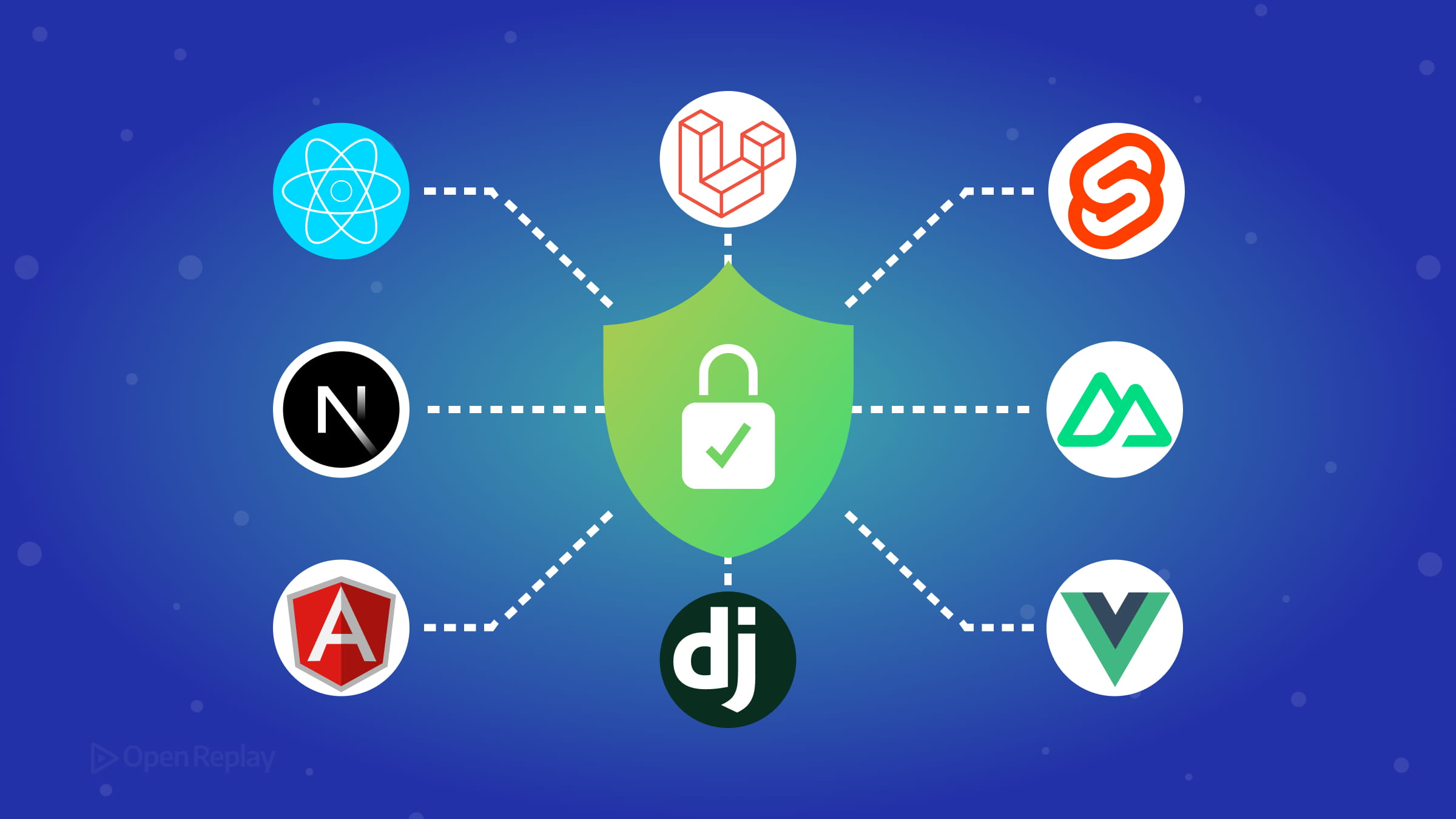
Modern frameworks reduce that risk by making the secure path the default path. Here are five built-in security protections that ship with many modern full-stack frameworks and framework ecosystems—and what they actually protect you from.
Key Takeaways
- Modern frameworks escape dynamic output by default, preventing XSS without requiring manual intervention.
- CSRF protection ships built-in with frameworks like SvelteKit, Django, and Laravel, removing a common source of implementation error.
- Server-only execution boundaries in Next.js and SvelteKit structurally prevent secrets from leaking into client bundles.
- Centralized security header configuration reduces misconfiguration risk across routes.
- First-party auth and session libraries apply secure cookie flags and other hardened defaults out of the box, but always verify their maintenance status.
1. Automatic Output Escaping Prevents XSS by Default
Cross-site scripting (XSS) remains one of the most common vulnerabilities in web applications. It happens when user-supplied content gets rendered as executable HTML or JavaScript.
React, Angular, Vue, and Svelte all escape dynamic content by default before rendering it to the DOM. Meta-frameworks built on top of them—Next.js, Nuxt, SvelteKit—inherit this behavior. In React, {userInput} renders as text, not markup. Angular’s template engine does the same. You have to explicitly opt out—using dangerouslySetInnerHTML in React or [innerHTML] in Angular—to bypass this protection.
This is one of the clearest examples of a secure by default frontend framework behavior: the dangerous path requires deliberate effort, not the safe one.
2. Built-in CSRF Protection for State-Changing Requests
Cross-site request forgery (CSRF) tricks authenticated users into submitting requests they didn’t intend to make. Preventing it manually requires generating, storing, and validating tokens on every state-changing request—easy to get wrong.
Frameworks like SvelteKit include CSRF protections for form actions through built-in origin checks. Next.js encourages CSRF-safe patterns through Server Actions, which rely on origin validation and POST-only mutations. Laravel and Django automatically generate and validate CSRF tokens on form submissions.
These are genuine default security protections in web frameworks—you usually don’t implement the underlying mechanics yourself.
3. Server-Only Execution Keeps Secrets Off the Client
Leaking API keys and database credentials into client-side bundles is a surprisingly common mistake when moving fast. Modern full-stack frameworks address this structurally.
Next.js introduces a clear boundary between server and client code. Server Components (the default in the App Router) and files using the "use server" directive execute only on the server. Environment variables without the NEXT_PUBLIC_ prefix stay server-side only. The server-only package adds a build-time safeguard that prevents accidental imports into client bundles. SvelteKit uses $env/static/private and $env/dynamic/private to enforce the same boundary.
This is a structural framework security default that prevents an entire class of accidental secret exposure—not just a linting rule, but a framework-level separation of server and client execution.
Discover how at OpenReplay.com.
4. Security Header Tooling Reduces Misconfiguration Risk
HTTP security headers—Content-Security-Policy, X-Frame-Options, Strict-Transport-Security—meaningfully reduce attack surface. But setting them correctly by hand across every route is tedious and inconsistent.
Next.js lets you configure headers centrally in next.config.js. Nuxt includes the nuxt-security module, which applies a sensible default header set with a single install. SvelteKit supports headers through hooks, keeping configuration in one place.
These aren’t automatic in the strictest sense, but they’re strongly encouraged through built-in utilities—far better than hand-rolling header logic per endpoint.
5. Secure Session and Auth Primitives Reduce Common Mistakes
Rolling your own session management introduces real risk: insecure cookie flags, weak token generation, improper expiry. First-party ecosystem modules address this directly.
Auth.js (formerly NextAuth.js) provides session handling and secure cookie configuration with sensible defaults. For SvelteKit, the Lucia library was a popular choice for session management, but it has since been deprecated. Its author now maintains a guide for implementing session primitives directly—still a useful reference, but no longer an actively maintained library. When choosing auth tooling, always verify that the project is actively maintained and receiving security patches.
These tools aren’t part of the core framework, but they’re the ecosystem’s recommended path—which matters.
Conclusion
These security features in modern web frameworks meaningfully raise your baseline. They eliminate common footguns that trip up even experienced developers. But they don’t replace authorization logic, input validation, dependency auditing, or a broader secure development process.
Think of them as the seatbelt—essential, always on, but not a substitute for watching the road. Keep your dependencies updated, validate data at your boundaries, and treat these defaults as the floor, not the ceiling.
FAQs
No. Framework defaults handle common vulnerabilities like XSS and CSRF, but they cannot cover application-specific logic such as authorization checks, business rule validation, or third-party dependency risks. A security audit evaluates your entire application surface, including areas frameworks intentionally leave to you. Treat defaults as a strong starting point, not a complete security strategy.
They prevent keys from appearing in client-side bundles, which eliminates one of the most common leak vectors. However, you still need to restrict key permissions, rotate them regularly, and avoid logging them in plaintext. Server-only execution is a structural safeguard against accidental exposure, not a replacement for proper secrets management practices like using a vault or environment-scoped access controls.
Submit a state-changing request from a different origin without the expected CSRF token or origin header. The framework should reject it. Most frameworks like Django, Laravel, and SvelteKit log or return a 403 error for failed CSRF checks. You can also inspect form HTML to confirm tokens are being injected, and review network requests to verify they are sent and validated on the server side.
Use the framework module or built-in configuration rather than setting headers manually per route. Centralized configuration reduces the chance of missing a route or introducing inconsistencies. However, you should still review the defaults the module applies, since not every preset matches your application's needs. For example, a strict Content-Security-Policy may break inline scripts you depend on.
Gain Debugging Superpowers
Unleash the power of session replay to reproduce bugs, track slowdowns and uncover frustrations in your app. Get complete visibility into your frontend with OpenReplay — the most advanced open-source session replay tool for developers. Check our GitHub repo and join the thousands of developers in our community.