Three Alternatives to Vercel for Modern Web Hosting

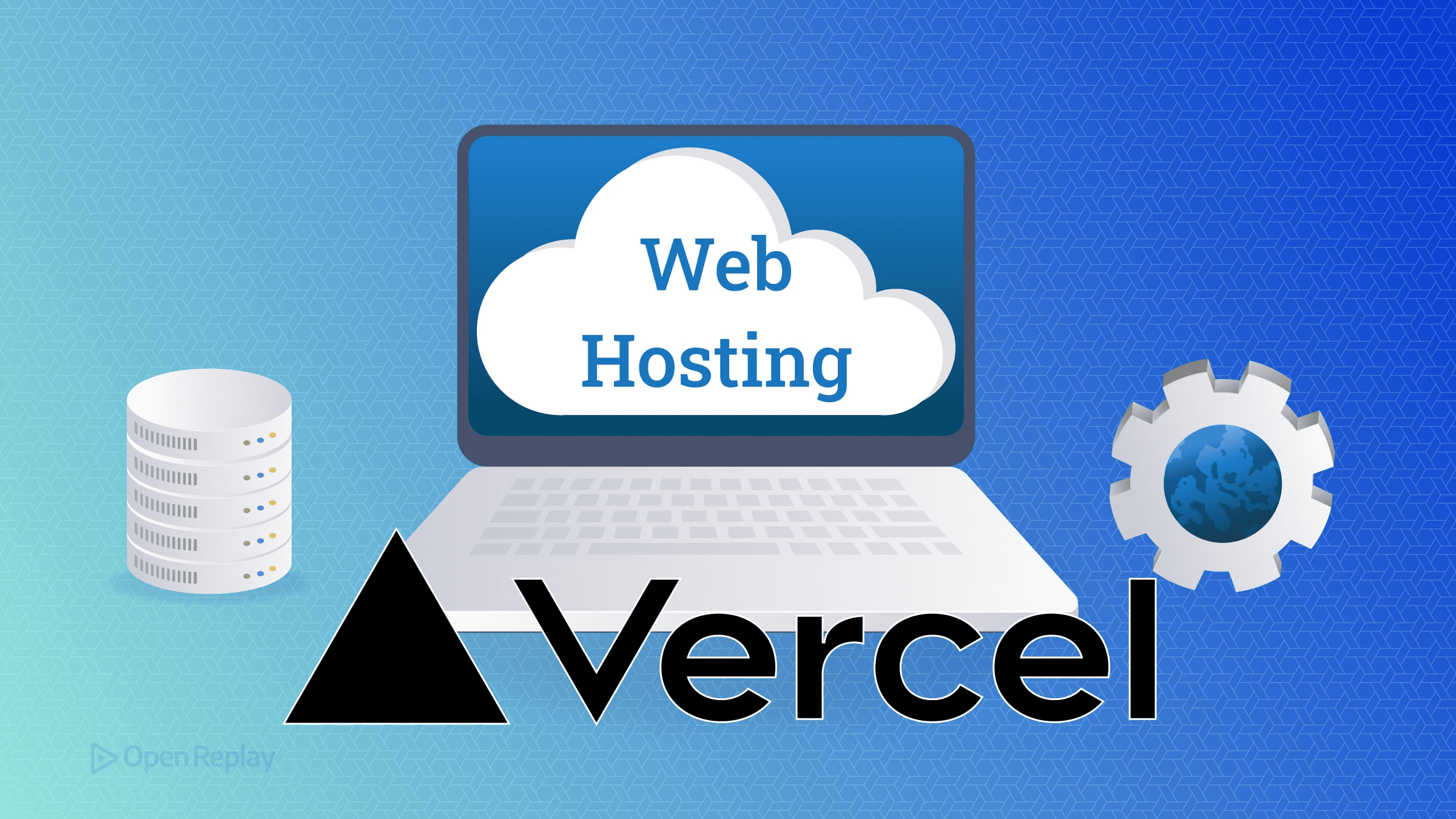
Vercel made deploying Next.js apps trivially easy. Push to Git, get a URL. For many teams, that simplicity justified the premium. But in 2025, the calculus is shifting.
The pricing complexity has grown. Hobby tier limits feel restrictive for real projects. Build minutes and serverless compute costs surprise teams at scale. And some workloads—background jobs, custom runtimes, stateful services—simply don’t fit Vercel’s model.
If you’re evaluating modern web hosting platforms beyond Vercel, three alternatives stand out: Netlify, Cloudflare Pages, and Fly.io. Each takes a different approach to edge hosting for frontend apps, and understanding those differences matters more than comparing feature checklists.
Key Takeaways
- Vercel excels at Next.js deployments but its pricing and workflow constraints push teams toward alternatives in 2025.
- Netlify offers credit-based pricing with broad framework support and a familiar Git-to-deploy workflow.
- Cloudflare Pages combined with Workers provides a full-stack edge platform with integrated data services at competitive prices.
- Fly.io gives container-level control for teams needing background workers, custom runtimes, or stateful services globally.
Why Teams Look Beyond Vercel in 2025
The core issue isn’t that Vercel is bad. It’s that the platform optimizes for a specific workflow—Next.js apps with serverless functions—and charges accordingly.
Teams hit friction when they need more control over runtimes, want predictable costs at scale, or require services Vercel doesn’t offer natively (databases, background workers, custom containers). The Hobby-to-Pro jump feels steep for side projects that outgrow free limits but don’t need enterprise features.
Netlify: Credit-Based Pricing with JAMstack Roots
Netlify pioneered the Git-to-deploy workflow that Vercel later refined. Today, it operates on a credit-based pricing model where builds, bandwidth, and function invocations all consume from a shared credit pool.
Deployment model: Connect a Git repo, configure build commands, and Netlify handles the rest. The platform excels at static sites and JAMstack architectures but supports server-side rendering through its adapter ecosystem.
Edge and serverless capabilities: Netlify offers both traditional serverless Functions (running on AWS Lambda) and Edge Functions (running on Deno at the edge). Edge Functions execute closer to users with lower cold-start latency—useful for authentication checks, A/B testing, or personalization.
Developer experience: Build plugins extend the CI/CD pipeline without custom scripts. Deploy previews generate automatically for pull requests. The dashboard surfaces build logs and function metrics clearly.
Pricing shape: The free tier remains realistic for small projects. Credits provide flexibility but require monitoring—bandwidth-heavy sites or function-intensive apps can burn through allocations faster than expected.
When comparing Netlify vs Vercel, the main trade-off is ecosystem depth. Vercel’s Next.js integration is tighter, while Netlify’s framework support is broader.
Cloudflare Pages: Full-Stack Edge Platform
Calling Cloudflare Pages “static hosting” misses the point entirely. Combined with Workers, it’s a full-stack edge platform with data options that compete with traditional backends.
Deployment model: Pages handles static assets and build pipelines. Workers run JavaScript/TypeScript at the edge across Cloudflare’s global network. Pages Functions let you add API routes directly to a Pages project without managing separate Worker deployments.
Edge and serverless capabilities: Smart Placement automatically runs compute-heavy Workers closer to your data sources rather than forcing everything to the edge. This solves the latency problem when your function needs to query a database in a specific region.
Data options: D1 provides SQLite at the edge. Hyperdrive accelerates connections to external PostgreSQL databases by pooling and caching. KV offers key-value storage. R2 handles object storage. You can build complete applications without leaving Cloudflare’s ecosystem.
Developer experience: Wrangler CLI handles local development and deployment. The learning curve is steeper than Netlify’s, but the ceiling is higher.
Pricing shape: Generous free tiers for Pages and Workers. Pay-as-you-go beyond that. Cloudflare Pages vs Vercel often favors Cloudflare on cost, especially for high-traffic static content.

Discover how at OpenReplay.com.
Fly.io: Container-Based Global Deployment
Fly.io takes a fundamentally different approach. Instead of abstracting away servers, it gives you containers running on hardware in regions you choose.
Deployment model: Package your app in a Docker container (or let Fly build one from a Dockerfile), and Fly.io handles distribution across its global network. You control which regions run your app.
Edge and serverless capabilities: This isn’t serverless in the traditional sense. Machines can run continuously or scale to zero. You get full control over the runtime—install system dependencies, run background processes, maintain persistent connections.
Data options: Fly Postgres provides managed PostgreSQL with automatic failover. LiteFS enables distributed SQLite. Volumes offer persistent storage attached to specific machines.
Developer experience: The flyctl CLI manages everything. The mental model is closer to Heroku than Vercel—you’re deploying services, not functions. This suits teams comfortable with containers who want global distribution without Kubernetes complexity.
Pricing shape: Usage-based billing with no fixed Hobby or Launch plans. You pay for compute time, memory, bandwidth, and storage consumed. Predictable at small scale but requires monitoring at larger scale.
Choosing the Right Platform
The decision depends on your constraints:
- Netlify fits teams wanting Vercel-like simplicity with broader framework support and credit-based cost flexibility.
- Cloudflare Pages + Workers suits projects needing edge compute with integrated data services and aggressive pricing.
- Fly.io works best when you need container-level control, background workers, or stateful services distributed globally.
Conclusion
None of these platforms is universally better than Vercel. Each optimizes for different trade-offs between simplicity, control, and cost. Netlify offers familiar workflows with flexible pricing. Cloudflare Pages delivers edge-first architecture with a growing data ecosystem. Fly.io provides container-level control for complex workloads. The right choice depends on what your specific project actually needs—not what looks best in a feature comparison table.
FAQs
Yes, all three platforms support Next.js. Netlify and Cloudflare Pages use adapters to handle server-side rendering. Fly.io runs your app in containers, giving you full control over the Node.js runtime. Migration complexity depends on how heavily you use Vercel-specific features like Edge Middleware or Image Optimization.
Cloudflare Pages offers the most generous free tier, with unlimited static requests and large monthly Worker request allowances. Netlify offers a free tier, but the allowances are credit-based rather than fixed bandwidth or build-minute quotas. Fly.io may include small promotional credits for new users, but it has no structured free tier and most usage is billed. For static-heavy projects, Cloudflare wins on cost.
Vercel partners with external providers like Neon and PlanetScale. Cloudflare offers native options including D1 for SQLite and Hyperdrive for PostgreSQL connections. Fly.io provides managed Postgres and LiteFS for distributed SQLite. Netlify relies on external database integrations through its ecosystem.
Fly.io is the clear choice for background jobs and long-running processes. Its container-based model lets you run persistent workers, cron jobs, and processes that exceed serverless time limits. Netlify and Cloudflare focus on request-response patterns and have strict execution time limits for functions.
Gain Debugging Superpowers
Unleash the power of session replay to reproduce bugs, track slowdowns and uncover frustrations in your app. Get complete visibility into your frontend with OpenReplay — the most advanced open-source session replay tool for developers. Check our GitHub repo and join the thousands of developers in our community.