Getting Creative with CSS Shape Functions

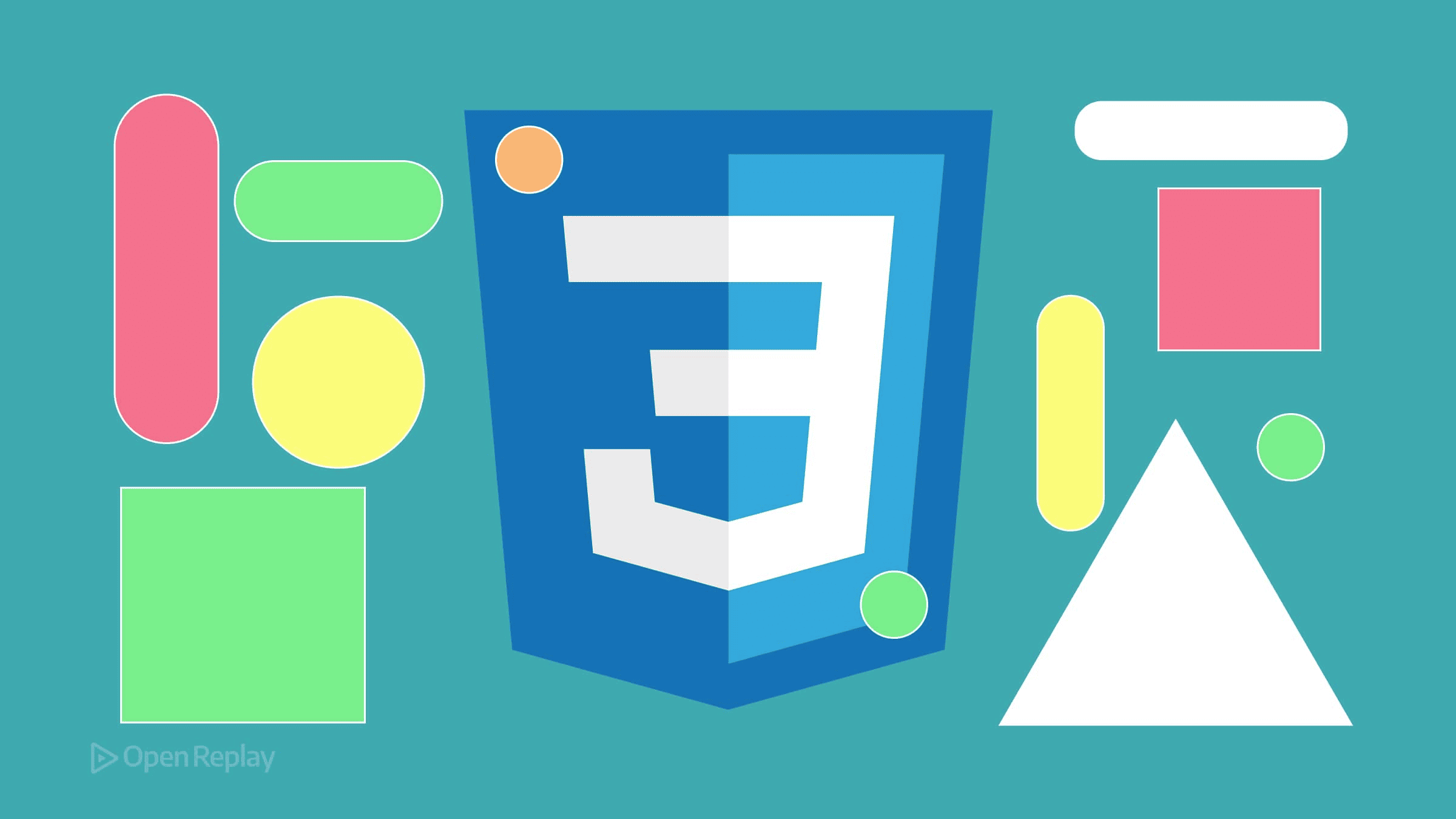
You want a decorative arrow that clips your hero image. You reach for clip-path: path(), write out the SVG coordinates, and it works—until the container resizes. The arrow stays fixed at its original pixel dimensions while everything else scales. This is the core limitation that the CSS shape() function solves.
Key Takeaways
- The CSS
shape()function creates responsive clipping paths using native CSS units like percentages andcalc(), unlikepath()which uses fixed pixel values shape()works withclip-pathfor visual clipping andoffset-pathfor motion animations, but not withshape-outsidefor text wrapping- Browser support includes Safari 18.4+ and Chromium-based browsers, but Firefox lacks support—always use
polygon()fallbacks for production - Combine
shape()with CSS custom properties and container query units for shapes that adapt across multiple contexts without JavaScript
What the CSS shape() Function Actually Does
The shape() function is a CSS-native way to define complex shapes using familiar CSS units like percentages, calc(), and container query units. Unlike path(), which borrows SVG syntax and interprets all values as pixels, shape() lets you build responsive CSS shapes that adapt to their containing element.
Here’s the key difference. With path():
clip-path: path("M0 0 L 100 0 L 150 50 L 100 100 L 0 100 z");Those numbers are fixed pixels. Resize the element, and the shape stays the same size.
With shape():
clip-path: shape(from 0% 0%,
  line to calc(100% - 50px) 0%,
  line to 100% 50%,
  line to calc(100% - 50px) 100%,
  line to 0% 100%,
  close);
Now the shape scales with the element. Percentages resolve against element dimensions. You can mix fixed values with relative ones, creating shapes that maintain proportions or preserve specific angles as containers change size.
Where shape() Works: clip-path and offset-path
The CSS shape() function currently applies to two properties with distinct purposes.
CSS clip-path shape() defines which portions of an element remain visible. Everything outside the shape gets clipped away. This is purely visual—the element’s box model stays rectangular, and layout calculations ignore the clipping entirely.
CSS offset-path shape() defines a motion path for animations. Combined with offset-distance, you can move elements along custom curves and lines. The shape describes the trajectory, not visibility.
These are fundamentally different from shape-outside, which affects text flow around floated elements. That property belongs to CSS Shapes Level 1 and does not currently support the shape() function—only basic shapes like circle(), ellipse(), and polygon().
Browser Support: The Reality in Late 2025
The shape() function shipped in Safari 18.4 and has landed in Chromium-based browsers. Firefox does not support it yet. This means you cannot treat it as baseline CSS.
Feature detection is straightforward:
@supports (clip-path: shape(from 0% 0%, line to 100% 0%)) {
  /* shape() supported */
}
For production use, progressive enhancement is essential. Start with a polygon() fallback that approximates your shape without curves, then layer the shape() version for supporting browsers:
.element {
  clip-path: polygon(0 0, 80% 0, 100% 50%, 80% 100%, 0 100%);
  clip-path: shape(from 0% 0%,
    line to 80% 0%,
    line to 100% 50%,
    line to 80% 100%,
    line to 0% 100%,
    close);
}
The second declaration overwrites the first only in browsers that understand it.
Discover how at OpenReplay.com.
Creative Use Cases Worth Exploring
Decorative clipping becomes more practical when shapes respond to layout. A diagonal section divider can maintain its angle regardless of viewport width. A notched card corner can stay proportional as card sizes change in a grid.
Responsive masks for images benefit from mixing units. Keep a curved cutout at a fixed radius while the overall shape scales with the image container.
Motion paths gain flexibility when you can express waypoints in percentages. An element can orbit a container’s center regardless of that container’s actual dimensions.
The real power emerges when you combine shape() with CSS custom properties and container query units. A single shape definition can adapt to multiple contexts without JavaScript recalculation.
Conclusion
The CSS shape() function solves a specific problem: making complex clipping paths and motion paths responsive without leaving CSS. It uses native syntax, supports calc(), and works with percentage-based coordinates.
It does not replace path() for fixed-dimension shapes where pixel precision matters. It does not work with shape-outside for text wrapping. And it requires fallbacks until Firefox support arrives.
For creative visual effects that need to scale, shape() is the tool that was missing. Use it with clear fallback strategies, and your decorative clipping will finally behave like the rest of your responsive layout.
FAQs
Yes, you can animate between shape() values if both shapes have the same number and type of commands. The browser interpolates between corresponding coordinate values. If the command structures differ, the animation will not work smoothly and may snap between states instead of transitioning.
polygon() only supports straight lines between points and uses a simpler syntax. shape() supports curves through arc and curve commands, allows calc() expressions within coordinates, and provides more control over complex shapes. Use polygon() for simple angular shapes and as fallbacks for broader browser support.
No. The shape() function with clip-path is purely visual. The element's rectangular bounding box remains unchanged for pointer events, focus outlines, and accessibility tree calculations. Users can still click on visually clipped areas, which may require additional handling for intuitive interactions.
Yes, CSS custom properties work inside shape() coordinates. You can define variables for repeated values or create configurable shapes. Combine them with calc() for dynamic adjustments. This makes shape definitions reusable and easier to maintain across different components or responsive breakpoints.
Truly understand users experience
See every user interaction, feel every frustration and track all hesitations with OpenReplay — the open-source digital experience platform. It can be self-hosted in minutes, giving you complete control over your customer data. . Check our GitHub repo and join the thousands of developers in our community..