The Debugging Mindset Every Developer Needs

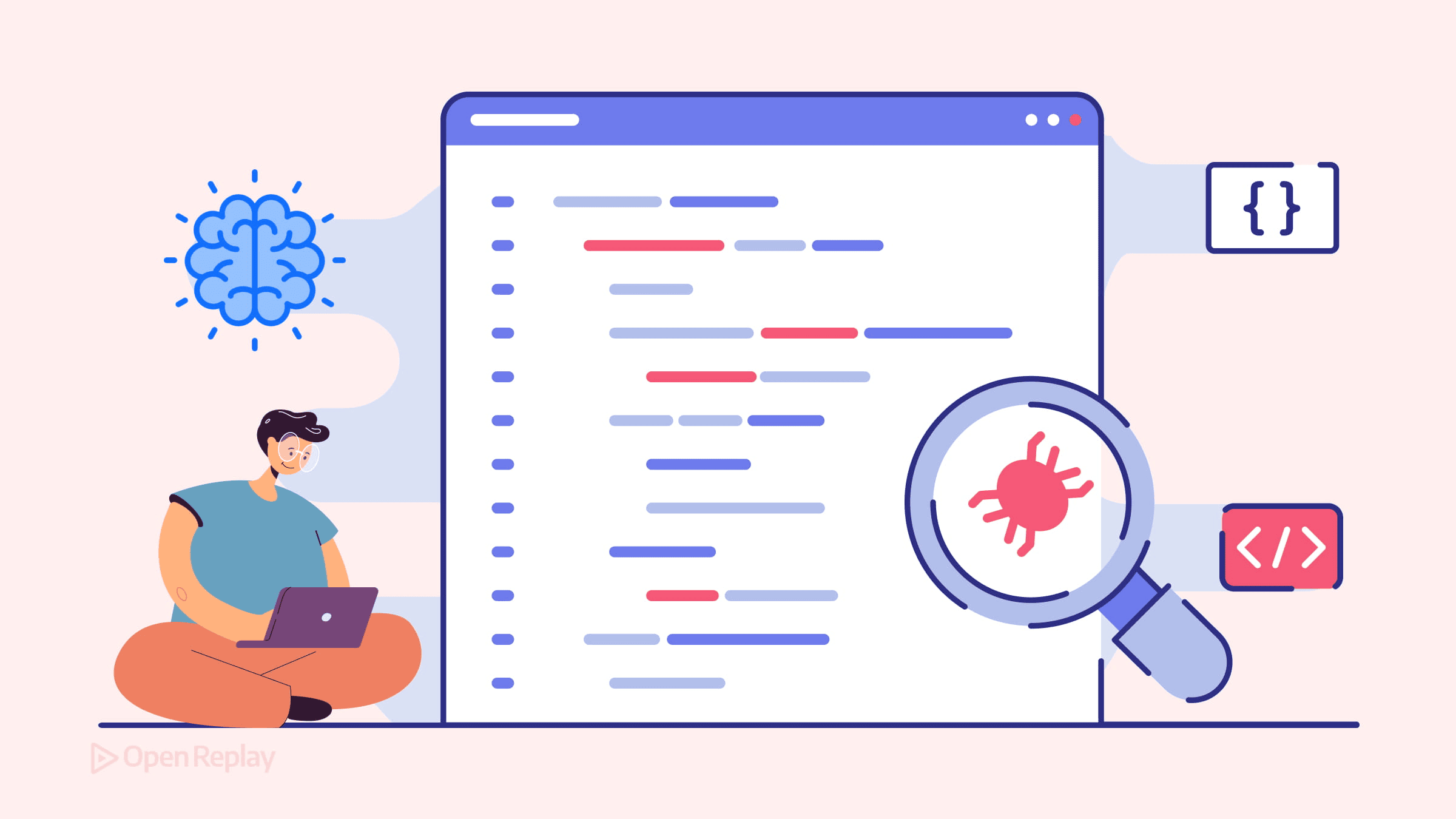
You’re staring at a TypeError: Cannot read properties of undefined (reading 'map'). You’ve added six console.log statements. You’ve changed three things at once. Nothing works, and you have no idea which change broke what.
This chaotic approach wastes hours. The solution isn’t more logging—it’s adopting a structured debugging mindset that transforms how you investigate problems.
Key Takeaways
- Bugs exist in the gap between your mental model and how the code actually behaves—random changes widen this gap rather than close it.
- Adopt a hypothesis-driven approach: observe first, form a testable theory, run the smallest possible experiment, then analyze results.
- Create minimal reproducible examples to isolate problems and eliminate false leads from unrelated code.
- Use modern tools like conditional breakpoints, individual request throttling, and AI-assisted debugging to accelerate systematic investigation.
Why Most Debugging Fails
Bugs occur when your mental model of the code doesn’t match reality. You think that variable contains an array. It doesn’t. The gap between assumption and truth is where bugs live.
Random code changes don’t close this gap. They widen it. Each untested modification introduces new variables, making the original problem harder to isolate.
Effective debugging requires a different approach: observe first, hypothesize second, modify last.
The Hypothesis-Driven Investigation
The debugging mindset treats every bug as a scientific experiment. Before touching code, you need a testable theory about what’s wrong.
Observation: What exactly happens? Not what you expect—what actually occurs. Check the console, network panel, and rendered output.
Hypothesis: Based on evidence, what single thing might cause this? “The API response structure changed” is testable. “Something’s broken” is not.
Experiment: Design the smallest possible test. If your hypothesis is correct, what specific result would you see?
Analysis: Did the test confirm or refute your theory? Either outcome is progress.
This process feels slower initially. It’s dramatically faster overall because you’re building understanding, not guessing.
Minimal Reproducible Examples
When a bug appears in a complex Next.js application with dozens of components, your first instinct might be to debug in place. Resist it.
Instead, isolate the problem. Create the smallest possible code sample that reproduces the issue. Strip away unrelated state, remove extra components, use hardcoded data instead of API calls.
This isolation accomplishes two things: it often reveals the root cause immediately, and it eliminates false leads from unrelated code. A bug that vanishes when you remove a specific component tells you exactly where to look.
For TypeScript projects, minimal examples also help distinguish between type errors and runtime issues—two problems that require different solutions.
Discover how at OpenReplay.com.
Modern Tools That Support This Mindset
Modern tooling offers powerful capabilities for hypothesis-driven debugging.
Chrome DevTools MCP
Chrome DevTools supports the Model Context Protocol (MCP), allowing AI tools and agents to integrate with DevTools and assist with debugging workflows. Rather than replacing systematic thinking, MCP can accelerate the observation phase by surfacing relevant context faster.
Individual Request Throttling
Network issues often appear intermittently because they depend on timing. Recent versions of Chrome DevTools allow you to throttle specific network requests without affecting others. This makes race conditions easier to reproduce—transforming “sometimes broken” into “consistently broken under these conditions.”
Bun Debugger
The Bun debugger provides a web-based interface for server-side JavaScript debugging. For full-stack applications, this means consistent debugging workflows across client and server code. Set breakpoints in your API routes with the same tools you use for frontend components.
WebAssembly Debugging
WebAssembly debugging has improved significantly in modern tooling. Source maps increasingly allow you to step through original Rust or C++ code rather than compiled WASM, making low-level modules more approachable to debug.
Vite Integration
Vite improves source map accuracy and HMR reliability, reducing the “is this a real bug or a build artifact?” confusion that plagues development. Accurate source maps mean stack traces point to actual problems, not transpilation artifacts.
Observe Before You Modify
The most common debugging mistake is changing code before understanding the current behavior. Every modification without observation is a guess.
Before adding that console.log, ask: what do I expect to see, and what would each possible result tell me? This transforms logging from random probing into targeted data collection.
Use conditional breakpoints instead of littering code with log statements. In Chrome DevTools, right-click a line number and add a condition like userId === 'problem-user'. The debugger pauses only when your specific hypothesis applies.
Building the Habit
The debugging mindset isn’t natural. Our instinct when code breaks is to fix it immediately. Fighting that instinct—pausing to observe and hypothesize—requires deliberate practice.
Start with your next bug. Before changing anything, write down what you observe and one specific hypothesis. Test that hypothesis with the smallest possible experiment. Document what you learn.
This discipline compounds. Each systematic investigation builds pattern recognition that makes future debugging faster. You’ll start recognizing bug categories and their likely causes, turning hours of confusion into minutes of targeted investigation.
Conclusion
The difference between developers who debug efficiently and those who struggle isn’t intelligence or experience—it’s methodology. By adopting the hypothesis-driven approach and leveraging modern tooling, you transform debugging from frustrating guesswork into systematic problem-solving. Start with your next bug: observe, hypothesize, test, and learn. Your debugging time will shrink as your understanding grows.
FAQs
If you have tested three distinct hypotheses without progress or spent more than an hour on a single bug without new insights, it is time to seek help. Document what you have tried and what you have learned. This preparation often reveals the solution yourself and makes others more willing to assist.
Console.log requires modifying code and only shows values at specific moments you anticipated. Breakpoints let you pause execution and inspect all variables in scope without code changes. Conditional breakpoints add precision by pausing only when specific conditions are met, making them far more efficient for targeted investigation.
Use feature flags to enable verbose logging for specific users. Implement error tracking services that capture stack traces and application state. Reproduce the production environment locally using the same data and configuration. Network throttling and request mocking can simulate production conditions during local debugging.
Not always, but it is valuable for complex or persistent bugs. If you can fix an issue in under five minutes through direct inspection, skip the isolation step. For bugs that resist quick fixes or involve multiple interacting systems, the time spent creating a minimal example usually pays for itself many times over.
Understand every bug
Uncover frustrations, understand bugs and fix slowdowns like never before with OpenReplay — the open-source session replay tool for developers. Self-host it in minutes, and have complete control over your customer data. Check our GitHub repo and join the thousands of developers in our community.