Embedding YouTube Videos Without Slowing Down Your Site

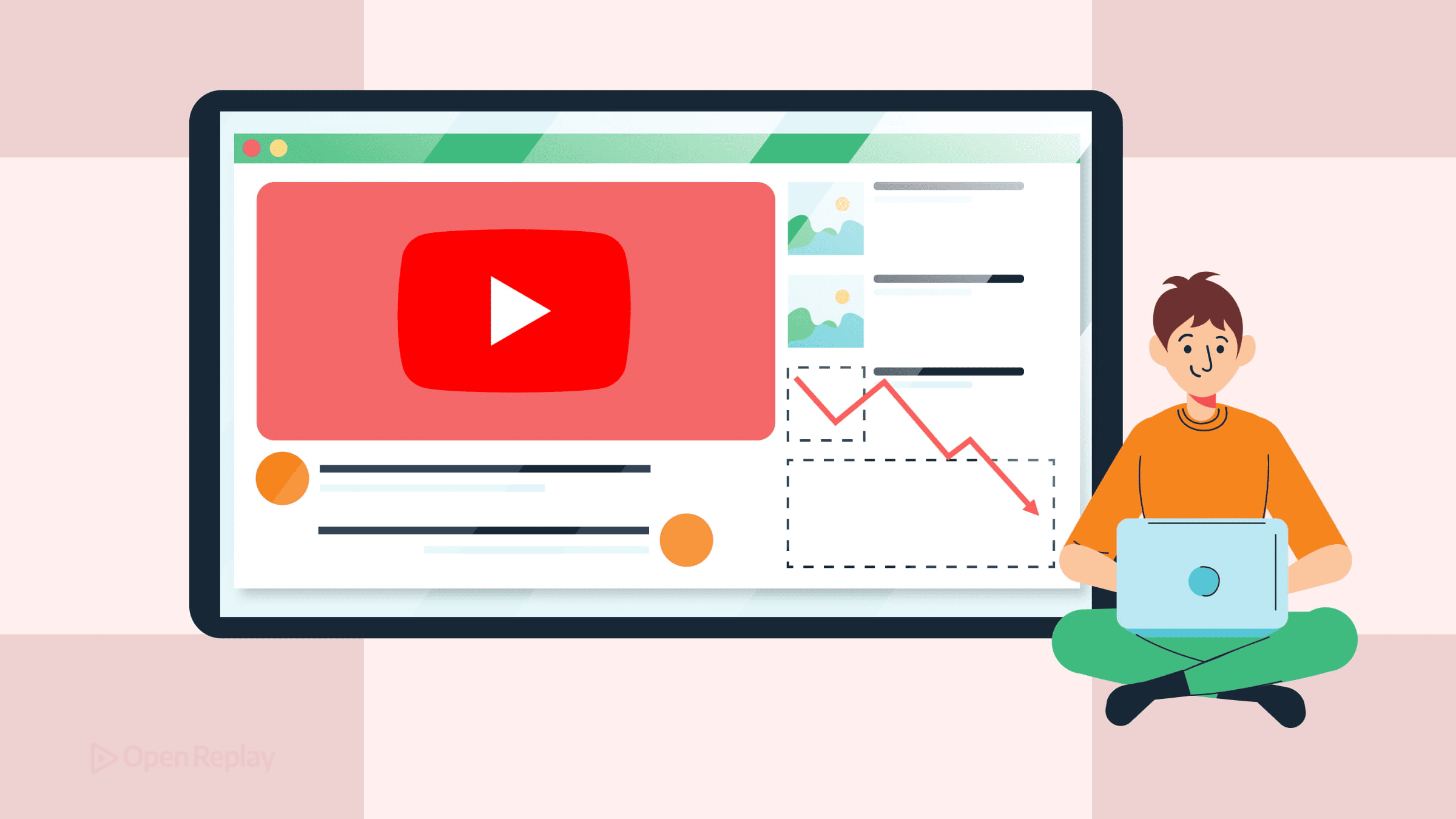
A single YouTube iframe can quietly wreck your Core Web Vitals. Even with loading="lazy" applied, that embed pulls in hundreds of kilobytes of JavaScript, establishes multiple network connections, and competes for main thread time—all before your visitor clicks play. If you’re shipping media-heavy pages and watching your LCP and INP scores suffer, the standard embed approach is likely the culprit.
This article explains why YouTube iframes remain expensive and how the facade pattern—a click-to-play video embed using a lightweight placeholder—solves the problem without sacrificing user experience.
Key Takeaways
- Standard YouTube iframes load hundreds of kilobytes of JavaScript and establish multiple network connections, hurting LCP and INP scores even when users never play the video
- Native
loading="lazy"only postpones the performance cost rather than eliminating it - The facade pattern replaces iframes with lightweight placeholders (thumbnail + play button), loading the actual player only on user click
- Use
youtube-nocookie.comfor reduced tracking and specify theoriginparameter when using the IFrame API for security - Consider accessibility: ensure play buttons are keyboard-accessible and properly labeled for screen readers
Why YouTube Iframes Still Hurt Performance
When you drop a standard YouTube iframe into your page, the browser immediately begins fetching YouTube’s player scripts, tracking code, and associated resources. This happens regardless of whether the video is visible or whether the user intends to watch it.
The performance cost shows up in two critical metrics:
LCP (Largest Contentful Paint): YouTube’s iframe often becomes the LCP element or delays other content from rendering. The player’s JavaScript competes for bandwidth and parsing time during the critical rendering window.
INP (Interaction to Next Paint): YouTube’s scripts add main thread work that can delay response to user interactions elsewhere on the page. Even if the video sits below the fold, its JavaScript executes and affects responsiveness.
If you need a refresher on how LCP or INP are measured, Google documents them as part of Core Web Vitals: https://web.dev/articles/inp & https://web.dev/articles/lcp
Why loading="lazy" Falls Short
Native lazy loading on iframes delays the network request until the iframe approaches the viewport. However, once triggered, you still pay the full cost—all the scripts load, connections establish, and main thread work executes. For videos above the fold, lazy loading provides zero benefit. For videos below the fold, it merely postpones the problem rather than eliminating it.
The lazy loading iframe approach treats the symptom, not the cause. The real issue is loading YouTube’s heavy player infrastructure before the user demonstrates intent to watch.
The Facade Pattern: Load on Intent
The YouTube facade pattern replaces the iframe with a lightweight placeholder—typically a thumbnail image and a play button. The actual iframe loads only when the user clicks, signaling genuine intent to watch.
This click-to-play video embed approach delivers dramatic improvements:
- Initial page load: Instead of hundreds of kilobytes of JavaScript, you load a single image (often under 20KB with proper sizing)
- Main thread: Zero YouTube JavaScript execution until interaction
- Network connections: No preemptive connections to YouTube’s servers
The pattern works because most visitors don’t watch embedded videos. You’re optimizing for the common case while preserving full functionality for users who actually want to play.
Implementation Essentials
A facade implementation needs three components:
- Thumbnail image: Use YouTube’s thumbnail URLs (
https://i.ytimg.com/vi/VIDEO_ID/hqdefault.jpg) or serve optimized versions from your own infrastructure - Play button overlay: A simple CSS-styled button that indicates interactivity
- Click handler: JavaScript that replaces the placeholder with the actual iframe on user interaction
For the iframe source, use youtube-nocookie.com instead of youtube.com. This privacy-focused YouTube embed reduces tracking and cookie behavior, though it doesn’t eliminate all data collection.
When constructing the iframe URL, stick to documented embed parameters. Common useful options include autoplay=1 (to start playback immediately after the user-initiated load). Note that rel=0 no longer disables related videos entirely and only biases suggestions toward the same channel.
YouTube maintains the current parameter list in its official docs: https://developers.google.com/youtube/player_parameters
Discover how at OpenReplay.com.
Security and Privacy Considerations
When using YouTube’s IFrame API for programmatic control, specify the origin parameter matching your domain. This prevents other sites from controlling your embedded player.
Limit iframe permissions with the allow attribute. A reasonable baseline:
<iframe
  src="https://www.youtube-nocookie.com/embed/VIDEO_ID?autoplay=1&origin=https://yourdomain.com"
  allow="accelerometer; autoplay; encrypted-media; gyroscope; picture-in-picture"
  allowfullscreen>
</iframe>
Avoid granting permissions the player doesn’t need. The sandbox attribute can further restrict iframe capabilities, though it often breaks features such as fullscreen, autoplay, or the IFrame API—test thoroughly.
Note that while youtube-nocookie.com reduces tracking, it doesn’t make embeds fully private. YouTube still collects some data when the iframe loads. For strict privacy requirements, the facade pattern’s deferred loading provides an additional layer—no data flows to YouTube until the user explicitly chooses to watch.
Trade-offs Worth Considering
The facade pattern isn’t free. Users experience a brief delay between clicking play and video playback starting, as the iframe must load at that moment. You can mitigate this with resource hints—adding preconnect to YouTube’s domains only after user intent (for example on hover or focus events):
<link rel="preconnect" href="https://www.youtube-nocookie.com">
<link rel="preconnect" href="https://i.ytimg.com">
Accessibility requires attention. Ensure your play button is keyboard-accessible and properly labeled for screen readers. The placeholder should communicate that it’s an interactive video element, not just a static image.
Conclusion
YouTube embed performance problems persist because the default approach front-loads costs that most users never benefit from. The facade pattern flips this equation: pay nothing upfront, load the full player only when someone actually wants to watch.
For media-heavy pages where Core Web Vitals matter, implementing click-to-play facades is one of the highest-impact changes you can make. Your LCP improves, your INP stays responsive, and users who want video still get it—just with a single extra click.
FAQs
Yes, the facade pattern works with playlists. When constructing your iframe URL, use the list parameter along with the video ID. The placeholder thumbnail can show the first video, and clicking play loads the full playlist player. The same performance benefits apply since you still defer all YouTube resources until user interaction.
Apply the facade pattern to each embed individually. Each video gets its own placeholder and click handler. This approach scales well because you only load iframe resources for videos users actually click. For pages with many videos, consider adding preconnect hints only on hover to avoid unnecessary connection overhead.
YouTube analytics track views and engagement only after the iframe loads and playback begins. Since the facade defers iframe loading until user click, your analytics remain accurate. You still get full view counts, watch time data, and engagement metrics for users who actually watch your embedded videos.
Yes, you can serve any image as your placeholder thumbnail. Host optimized images on your own server or CDN for better control over file size and format. Use modern formats like WebP or AVIF with appropriate dimensions to minimize load time while maintaining visual quality.
Understand every bug
Uncover frustrations, understand bugs and fix slowdowns like never before with OpenReplay — the open-source session replay tool for developers. Self-host it in minutes, and have complete control over your customer data. Check our GitHub repo and join the thousands of developers in our community.