Turning Git Repos into LLM-Ready Text: A Quick Guide

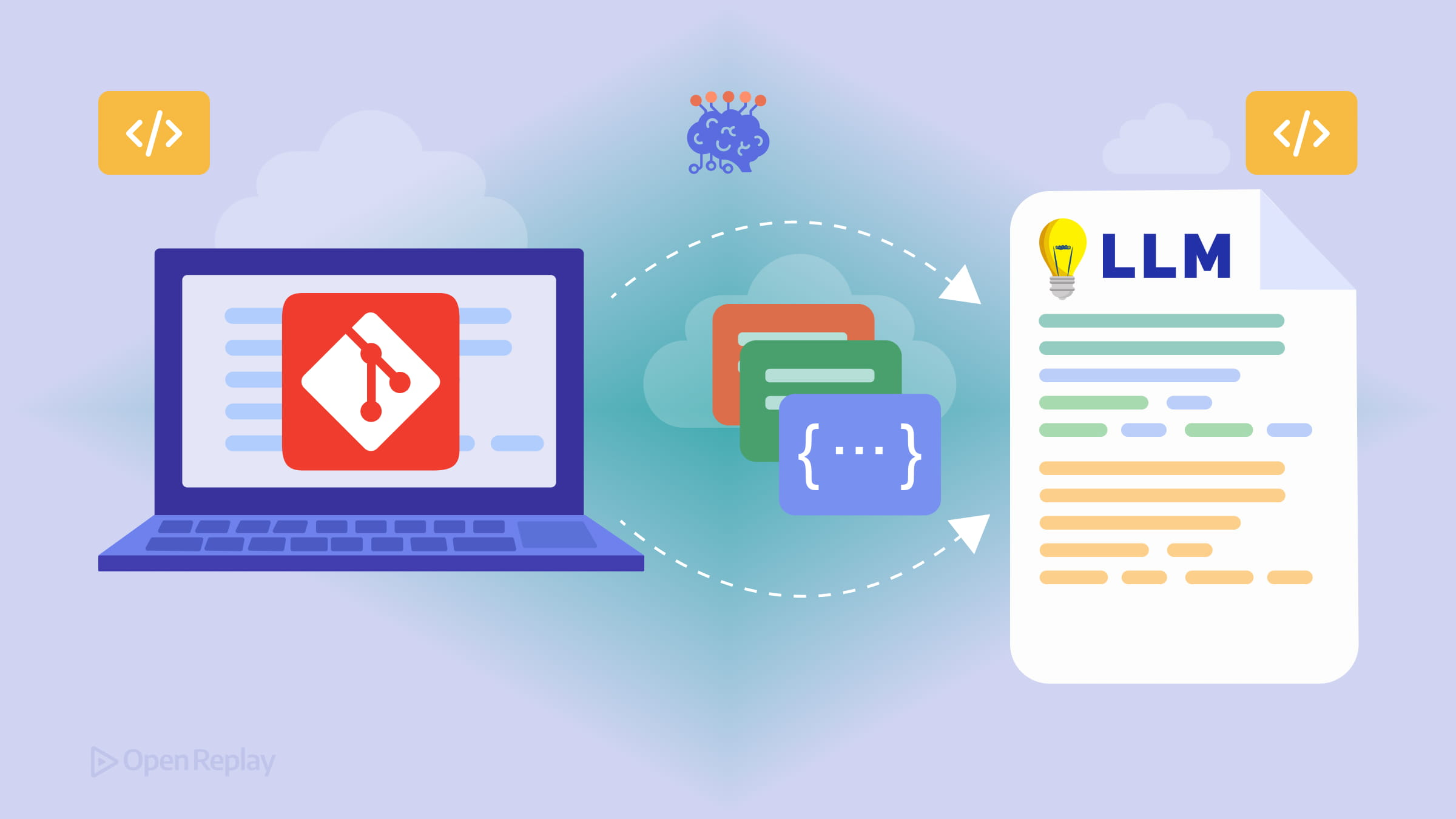
You want to ask an AI to review your codebase, explain a legacy module, or help you plan a refactor. So you open ChatGPT or Claude and immediately hit a wall: how do you actually get your code in there? Copy-pasting file by file is tedious. Uploading a zip often doesn’t help much. Pointing to a GitHub URL usually doesn’t give a chat model enough useful context on its own.
The answer is converting your Git repository into an LLM-ready codebase — a single, structured text representation that fits neatly into a prompt.
Key Takeaways
- In most chat interfaces, LLMs cannot directly inspect a repository, so codebases are often converted into structured, filtered text that fits within a model’s context window.
- Tools like Gitingest, Repomix, and repo2txt automate this conversion by excluding noise and concatenating relevant source files into a single output.
- Aggressive filtering — removing tests, dependencies, and build artifacts — can cut token usage significantly and sharpen model responses.
- Always scan for secrets before feeding code into any LLM, whether through a built-in check or a dedicated tool like truffleHog.
Why Raw Repositories Don’t Work as LLM Input
In a normal chat workflow, LLMs don’t browse file systems or inspect repositories directly. They read text within a context window, which has a hard token limit. A typical JavaScript project might contain hundreds of files, but most of them — node_modules, lock files, build artifacts, source maps — are noise. Feeding all of that into a model wastes tokens, blurs the signal, and often exceeds the limit entirely.
What models actually need is selective, structured text: the relevant source files, organized clearly, with enough context to reason about the code as a whole. That’s exactly what Git-repository-to-prompt-text conversion produces.
Tools That Convert Git Repos for LLMs
Several tools automate this process. Here are the most practical options:
Gitingest is the fastest zero-setup option. Replace hub with ingest in any GitHub URL and you get a single text digest of the repository, filtered and formatted for LLM input. It also now supports private repositories with a personal access token.
Repomix is a CLI tool that packages your codebase into Markdown, XML, JSON, or plain text. It gives you fine-grained control over which files to include, supports custom ignore patterns, and has a built-in security check that flags hardcoded secrets before output is generated.
repo2txt runs entirely in the browser. Paste a GitHub URL, select the files you want, and download a plain text file ready to paste into any LLM. It supports private repositories via personal access tokens, and the site says the code runs in your browser.
All three follow the same core pattern: clone or fetch the repo, filter files using ignore rules, then concatenate file paths and contents into a single readable output.
What Good Repository Context for AI Models Looks Like
A well-prepared output typically includes:
- A directory tree showing the overall structure
- File path headers before each file’s content
- Only source files — no binaries, no generated code, no dependencies
================================================
FILE: src/components/Header.tsx
================================================
import React from 'react'
...
This format helps the model orient itself before reading individual files, which meaningfully improves the quality of its responses.
Discover how at OpenReplay.com.
Practical Considerations Before You Convert
Filter aggressively. For a React or Next.js project, you probably only need src/, package.json, and maybe a config file or two. Excluding test files alone can noticeably reduce token usage.
Scan for secrets first. Before preparing codebases for LLM prompts — especially with third-party tools — make sure no API keys, tokens, or credentials are in your source files. Repomix does this automatically. For other tools, run a quick scan with git-secrets or truffleHog first.
Match output size to your model’s context window. Modern models commonly support context windows in the 100K–200K+ token range, and some workflows also benefit from prompt caching when you reuse the same large code context. A medium-sized frontend repo usually lands well within range after filtering.
Reuse Your Packaged Context
Once you’ve generated a clean text snapshot, save it. Many teams package their LLM-ready codebase once per sprint and reuse it across multiple prompts — for code review, documentation drafts, onboarding questions, and architecture discussions. This is the foundation of practical context-engineering workflows, and in some setups it now overlaps with patterns like the Model Context Protocol and tool-driven repository access.
Conclusion
Getting a full codebase into an LLM doesn’t require elaborate tooling or custom scripts. Tools like Gitingest, Repomix, and repo2txt handle the heavy lifting: filtering out noise, structuring the output, and producing a single text file that fits within a model’s context window. The key is to filter aggressively, scan for secrets, and match your output size to the model you’re using. Pick one of these tools, run it on your current project, and see what the model can do when it actually has the full picture.
FAQs
Yes. Repomix works locally, so it handles any repo on your machine regardless of visibility. repo2txt supports private GitHub repositories through personal access tokens. Gitingest now also supports private repositories with a personal access token, though some teams may still prefer a local-first tool for sensitive codebases.
Most conversion tools report the total size of the generated output. You can estimate token count by dividing the character count by roughly four for English text and code. Modern models commonly support context windows in the 100K–200K+ token range. If your output exceeds the limit, filter more aggressively by excluding tests, configs, or less relevant modules.
It depends on the model and provider. Code sent to cloud-hosted LLMs may be logged or retained unless the provider explicitly states otherwise. Always scan for secrets before converting, and review your provider’s data retention policy. For sensitive codebases, consider using a locally hosted model instead.
A good cadence is once per sprint or after any significant merge. The snapshot should reflect the current state of the code so the model gives relevant answers. Some teams automate this step in CI pipelines, generating a fresh text output alongside each release or major branch update.
Understand every bug
Uncover frustrations, understand bugs and fix slowdowns like never before with OpenReplay — the open-source session replay tool for developers. Self-host it in minutes, and have complete control over your customer data. Check our GitHub repo and join the thousands of developers in our community.