Popular JavaScript Game Engines Compared
Compare Phaser, Babylon.js, PlayCanvas, Excalibur, and melonJS to choose the right JavaScript game engine for 2D and 3D browser games.

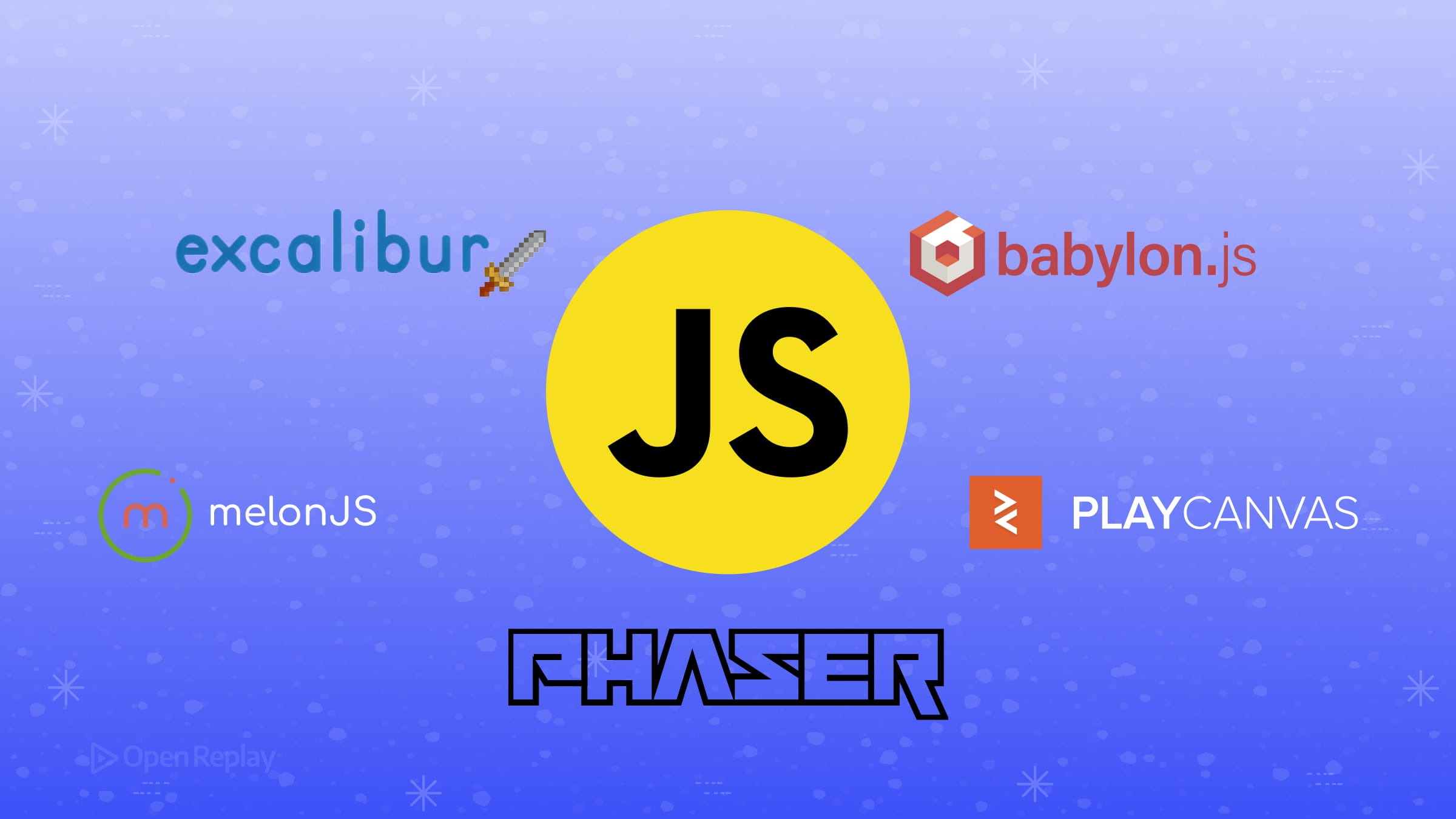
If you’re a frontend developer curious about building browser games, the first real decision you’ll face isn’t about game design — it’s about which JavaScript game engine to use. The options range from mature 2D frameworks to full 3D engines with visual editors, and picking the wrong one early costs time.
This article gives you a practical, high-level HTML5 game engine comparison focused on actively maintained tools relevant to modern web development.
Key Takeaways
- A game engine differs from a rendering library by bundling essential systems like game loops, physics, input handling, and asset management into a single package.
- Phaser 3 remains one of the most widely adopted 2D HTML5 game frameworks, with extensive documentation and community support.
- Babylon.js is a leading option for 3D browser experiences with first-class TypeScript support and strong WebGPU capabilities.
- PlayCanvas stands out for teams that prefer a visual, editor-driven workflow over a code-first approach.
- Choosing the right engine depends on your project’s dimension (2D vs 3D), your workflow preference (code vs editor), and how much built-in tooling you need.
What Makes a JavaScript Game Engine Different from a Rendering Library
Before comparing engines, one distinction matters: a game engine is not the same as a rendering library.
Three.js and PixiJS are excellent and widely used, but they are primarily rendering libraries rather than full game engines. They focus on rendering and graphics performance. They provide important pieces such as scene management or asset loading utilities, but they do not bundle the broader gameplay systems — such as integrated physics, input systems, scene lifecycle management, and gameplay architecture — that full engines provide.
You can absolutely build games with them, but you typically assemble more of the game architecture yourself.
A full game engine bundles those systems together. That’s the category this article focuses on.
2D and 3D JavaScript Game Engines: The Main Contenders
Phaser (v3) — Best All-Around 2D Engine
Phaser 3 is one of the most widely used HTML5 game frameworks for 2D browser games. It includes a game loop, scene manager, physics (Arcade and Matter.js), input, tilemaps, tweens, and audio — all ready to use from day one.
It’s code-first, meaning you write JavaScript or TypeScript directly rather than using a visual editor. The documentation is thorough, the community is large, and there are more tutorials available for Phaser than any other web-focused engine.
Worth noting: Phaser 4 is in active development and not yet stable for production. Phaser 3 remains the recommended version.
Best for: 2D platformers, puzzle games, arcade games, browser-first projects.
Babylon.js (v8) — Best for 3D Web Games
Babylon.js is a full-featured 3D JavaScript game engine built specifically for the web. It supports WebGL and has strong WebGPU support, which positions it well as browser graphics capabilities continue to evolve.
It supports physics through plugins (such as Havok), along with particle systems, animation tools, a material editor, and an online sandbox called the Babylon.js Playground. TypeScript support is first-class — the engine itself is written in TypeScript.
The learning curve is steeper than Phaser, but the documentation is strong and the community active.
Best for: 3D browser games, interactive 3D experiences, WebGPU-forward projects.
PlayCanvas (v2) — Best Editor-Driven 3D Engine
PlayCanvas offers a cloud-based visual editor alongside a JavaScript runtime engine. It’s a strong choice if you prefer working in an editor rather than writing everything in code.
The engine is open source, while the hosted editor provides a free tier with limitations such as public-project requirements. Performance is solid, and it has been used in commercial browser games and interactive ads.
Best for: 3D games, teams who prefer visual workflows, rapid prototyping.

Discover how at OpenReplay.com.
Excalibur.js — A Modern TypeScript-First 2D Engine
Excalibur is a 2D game engine written in TypeScript, designed specifically for browser games. It’s lighter than Phaser, with a clean API that feels natural to frontend developers already comfortable with TypeScript.
It’s less feature-rich than Phaser out of the box, but actively maintained and a good fit for smaller projects or developers who want tighter TypeScript integration.
Best for: TypeScript-first developers, lightweight 2D games.
melonJS — Lightweight Open-Source 2D Engine
melonJS is a lightweight, open-source 2D JavaScript game engine with built-in support for the popular Tiled map editor. It’s straightforward and well-suited to tile-based games like top-down RPGs or platformers.
Best for: Tile-based 2D games, developers who want a minimal, dependency-free engine.
Quick Comparison Table
| Engine | Dimension | Workflow | TypeScript | Best Use Case |
|---|---|---|---|---|
| Phaser 3 | 2D | Code-first | Good | Arcade, platformer, puzzle |
| Babylon.js | 3D | Code + tools | Excellent | 3D games, WebGPU projects |
| PlayCanvas | 3D | Editor-first | Good | Visual teams, 3D prototypes |
| Excalibur | 2D | Code-first | Excellent | Lightweight TS projects |
| melonJS | 2D | Code-first | Moderate | Tile-based games |
How to Choose the Right JavaScript Game Engine
- Building a 2D browser game? Start with Phaser 3.
- Need 3D with modern browser graphics? Babylon.js is a strong web-native option, especially with WebGPU gaining broader browser support.
- Prefer an editor over writing code? PlayCanvas fits that workflow.
- Working in TypeScript and want something lean? Excalibur is worth a look.
- Making a tile-based game and want simplicity? melonJS covers that well.
Conclusion
The best JavaScript game engine for your project depends on dimension (2D vs 3D), workflow preference (code vs editor), and how much built-in tooling you need. Phaser 3 has a mature ecosystem for 2D browser games, Babylon.js is a powerful option for 3D web experiences, and PlayCanvas offers a polished visual editor workflow. For smaller or TypeScript-focused projects, Excalibur and melonJS provide leaner alternatives. All five engines covered here are actively maintained — which matters more than it might seem when you’re building something you plan to finish.
FAQs
Can I use Three.js or PixiJS to build a full browser game?
You can, but they are rendering libraries rather than full game engines. They handle graphics and rendering efficiently but do not bundle the broader gameplay systems that full engines include. To build a complete game with them, you typically need to assemble your own architecture for game loops, input handling, physics, and asset management.
Is Phaser 3 still worth learning if Phaser 4 is in development?
Yes. Phaser 3 remains the stable, production-ready version with the largest ecosystem of tutorials, plugins, and community support. Phaser 4 is still in active development and not yet recommended for production projects. Starting with Phaser 3 gives you a solid foundation, and many core concepts will carry over when Phaser 4 reaches a stable release.
What is the advantage of Babylon.js over PlayCanvas for 3D games?
Babylon.js is fully open source and code-driven, giving you full control without relying on a hosted editor. It also has first-class TypeScript support and strong WebGPU integration. PlayCanvas excels when you prefer a visual, editor-first workflow. The choice depends on whether your team favors writing code directly or working within a graphical environment.
Do any of these JavaScript game engines support mobile deployment?
All five engines produce HTML5 output that runs in mobile browsers. For native mobile packaging, you can wrap the output using tools like Cordova or Capacitor. Performance varies by engine and game complexity, but 2D engines like Phaser and Excalibur generally run well on mobile devices with reasonable optimization.
Gain Debugging Superpowers
Unleash the power of session replay to reproduce bugs, track slowdowns and uncover frustrations in your app. Get complete visibility into your frontend with OpenReplay — the most advanced open-source session replay tool for developers.
Star on GitHub12k