How to Measure JavaScript Performance

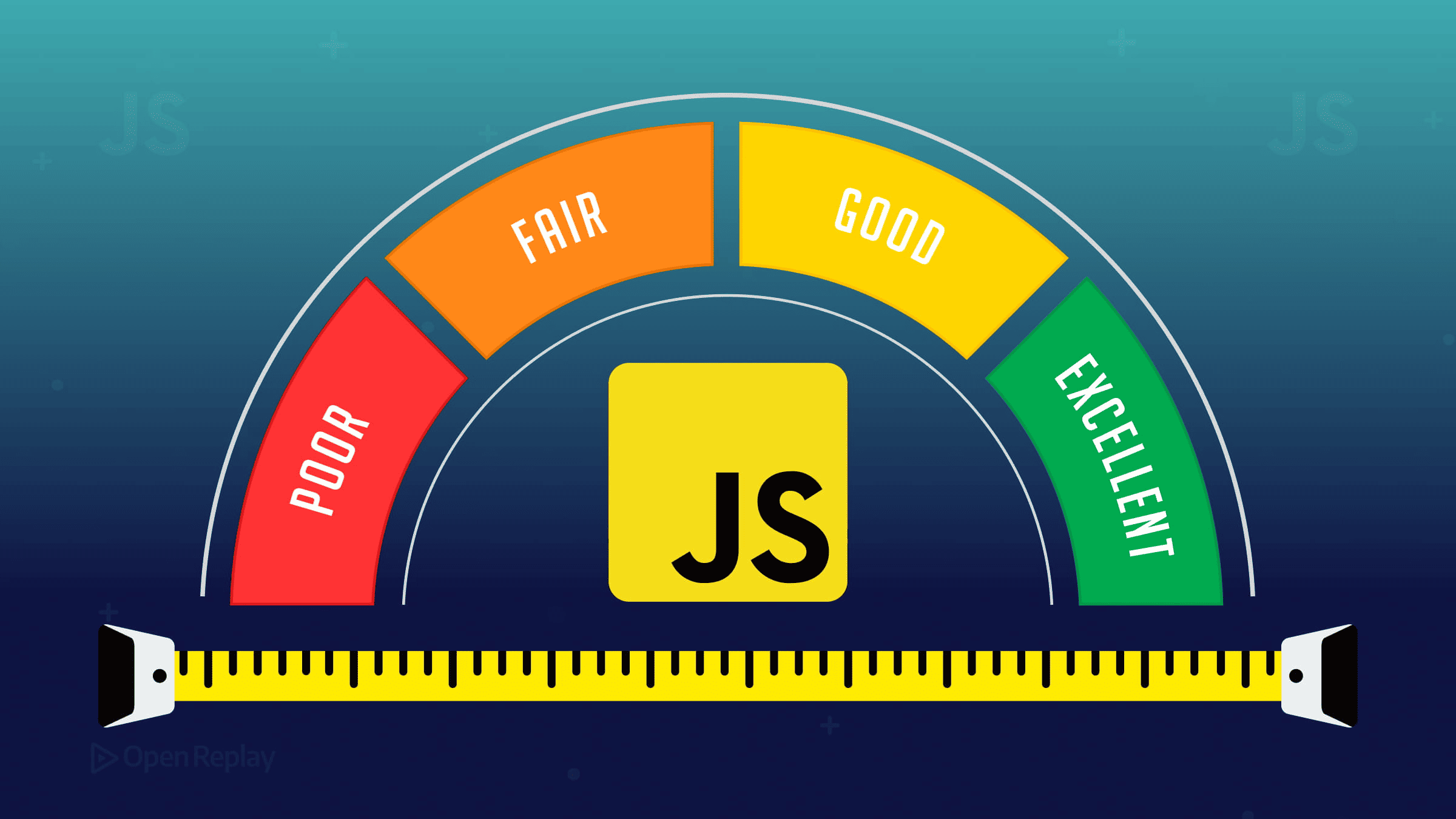
JavaScript performance problems are easy to feel but hard to pinpoint. Your app feels sluggish, interactions lag, and users notice — but without the right measurement tools, you’re guessing. This article covers practical JavaScript performance measurement techniques using modern browser APIs and DevTools, so you can find real bottlenecks and fix the right things.
Key Takeaways
- Distinguish between synthetic (lab) testing and real user monitoring (RUM) — use lab tools to diagnose, field data to validate.
- Chrome DevTools’ Performance panel surfaces long tasks, flame charts, and call trees for hands-on profiling.
- The Performance API (
performance.now(),performance.mark(),performance.measure()) provides precise, programmatic timing that integrates with DevTools. PerformanceObserverautomates entry collection for production monitoring, including long task detection.- Interaction to Next Paint (INP) is the Core Web Vital most closely tied to responsiveness. JavaScript execution is a major contributor, along with style, layout, and paint work.
Lab Testing vs. Real User Data
Before reaching for a tool, understand the two types of JavaScript performance measurement:
- Synthetic (lab) testing runs your code in a controlled environment. Tools like Lighthouse and Chrome DevTools give you repeatable, debuggable results. Great for development and CI pipelines.
- Field data (RUM) captures what real users experience. Tools like Chrome User Experience Report (CrUX) or RUM platforms show you actual performance across devices and networks.
Use lab tools to diagnose problems. Use field data to confirm they matter.
Profiling JavaScript in Chrome DevTools
Chrome DevTools is the most practical starting point for JavaScript performance metrics. Open the Performance panel, hit record, interact with your page, then stop.
What to look for:
- Long Tasks — any task blocking the main thread for more than 50ms shows up in red. These often delay user interactions. Modern tools may also surface Long Animation Frames, which provide more detailed insight into slow frames affecting responsiveness.
- Call Tree / Bottom-Up views — identify which functions consume the most execution time.
- Flame chart — visualize the call stack over time to spot expensive synchronous work.
Firefox DevTools offers a similar profiler. Both tools are free, require no setup, and work on any site.
Measuring JavaScript Execution Time with the Performance API
For precise, programmatic JavaScript performance measurement, use the browser’s built-in Performance API.
Using performance.now()
performance.now() returns a high-resolution timestamp in milliseconds, relative to the page’s time origin — making it more reliable than Date.now() for timing code.
const start = performance.now()
runExpensiveOperation()
const duration = performance.now() - start
console.log(`Took ${duration}ms`)
Using performance.mark() and performance.measure()
For structured timing across multiple points, use marks and measures. This integrates directly with DevTools and PerformanceObserver.
performance.mark('fetch-start')
const data = await fetchData()
performance.mark('fetch-end')

const measure = performance.measure('fetch-duration', 'fetch-start', 'fetch-end')
console.log(measure.duration) // milliseconds
Measures appear in the Chrome DevTools Performance panel under the Timings track, making them easy to correlate with other activity on the main thread.
Discover how at OpenReplay.com.
Automating Measurement with PerformanceObserver
PerformanceObserver lets you react to performance entries as they happen — useful for production monitoring.
const observer = new PerformanceObserver((list) => {
  for (const entry of list.getEntries()) {
    console.log(entry.name, entry.duration)
  }
})

observer.observe({ type: 'measure', buffered: true })
You can also observe longtask entries to detect main thread blocking in real user sessions.
Core Web Vitals and INP: The Metrics That Matter
Google’s Core Web Vitals are the standard JavaScript performance metrics for user experience. The most relevant for JavaScript is Interaction to Next Paint (INP) — it measures the latency of all interactions (clicks, taps, keyboard input) throughout a page’s lifetime.
An INP above 200ms is a warning sign. Above 500ms is poor. Heavy JavaScript execution during event handlers is the most common cause.
Use the web-vitals library to measure INP in the field:
import { onINP } from 'web-vitals'
onINP(({ value }) => console.log('INP:', value))
For SPAs, note that soft navigations (route changes without full page loads) are only partially captured by standard navigation metrics. Browser support for soft navigation measurement is still evolving, so instrumenting route transitions manually using performance.mark() can help fill gaps.
Choosing the Right Tool
| Goal | Tool |
|---|---|
| Quick debugging | console.time() / console.timeEnd() |
| Precise timing | performance.now() |
| Structured, visual timing | performance.mark() + performance.measure() |
| Automated monitoring | PerformanceObserver |
| Full page profiling | Chrome DevTools Performance panel |
| Audit scores + field data | Lighthouse + CrUX |
Conclusion
Effective JavaScript performance measurement starts with the right tool for the right question. Use DevTools to profile and explore, the Performance API to instrument specific code paths, and Core Web Vitals — especially INP — to understand what users actually experience. Measure first, then optimize.
FAQs
performance.now() returns a high-resolution timestamp relative to the page's time origin, offering sub-millisecond precision. Date.now() relies on the system clock, which can be affected by clock adjustments and offers only millisecond resolution. For benchmarking code execution, performance.now() is the more accurate and reliable choice.
Use a PerformanceObserver configured to observe entries of type longtask. Any task exceeding 50ms on the main thread is flagged as a long task. By collecting these entries in production, you can identify which user interactions trigger blocking work and prioritize optimization where it matters most.
Interaction to Next Paint measures the latency of all interactions during a page visit and reports the worst one. First Input Delay only captured the delay of the very first interaction. INP gives a fuller picture of runtime responsiveness, which is why Google replaced FID with INP as a Core Web Vital in March 2024.
Yes. Place performance.mark() calls before and after your await expression, then call performance.measure() with both mark names to calculate the elapsed time. The resulting measure entry includes the full duration of the async operation and appears in the DevTools Timings track for visual correlation.
Complete picture for complete understanding
Capture every clue your frontend is leaving so you can instantly get to the root cause of any issue with OpenReplay — the open-source session replay tool for developers. Self-host it in minutes, and have complete control over your customer data.
Check our GitHub repo and join the thousands of developers in our community.