Using PlanetScale for Scalable MySQL Databases
PlanetScale for scalable MySQL databases: Vitess-based scaling, database branching, deploy requests, and non-blocking schema migrations.

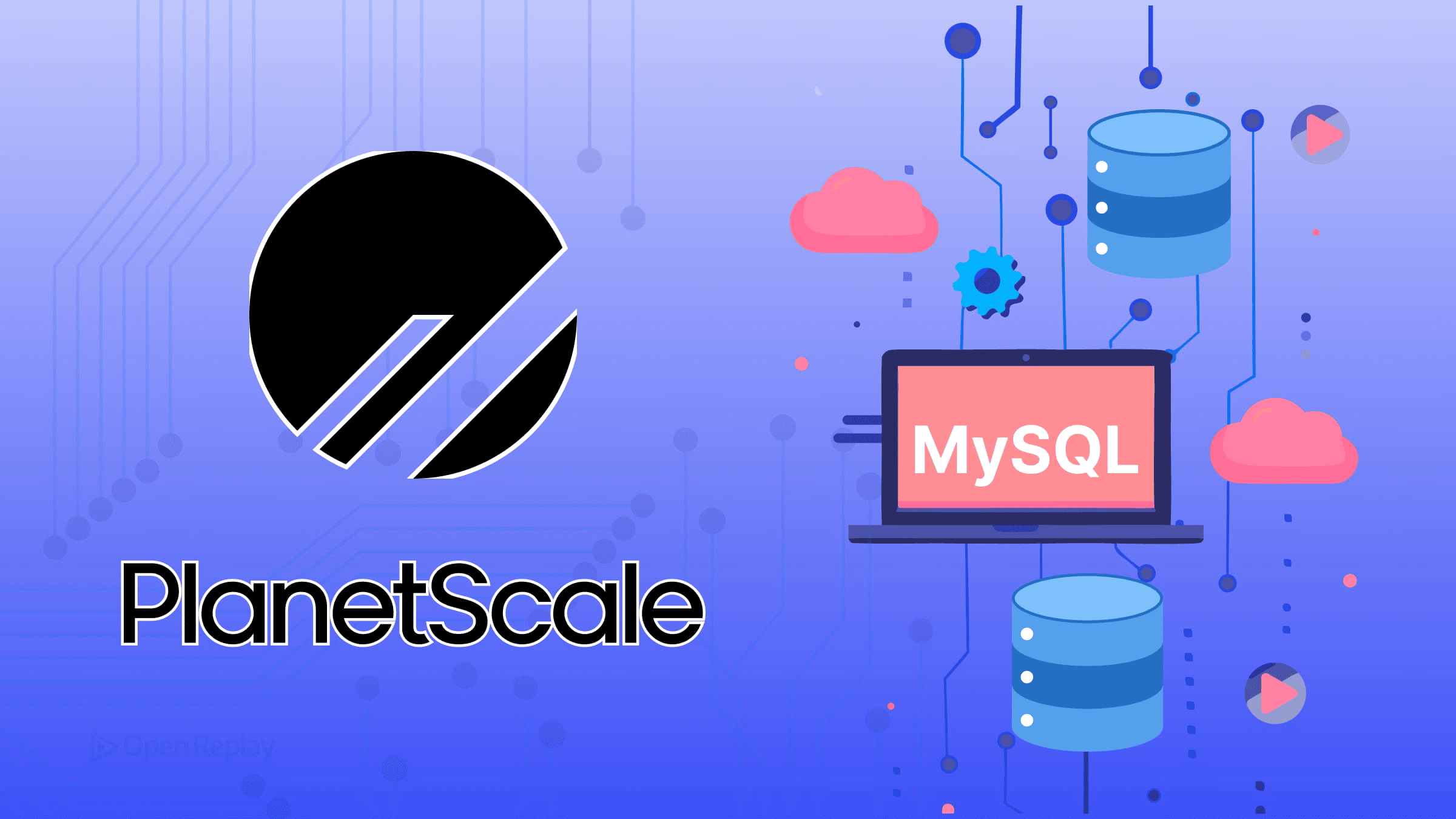
If you’re building a full-stack application with MySQL, at some point you’ll face a familiar problem: your local database works fine during development, but running a production-grade MySQL server yourself means dealing with backups, uptime, connection limits, and schema migrations that can take your app offline. PlanetScale is a managed MySQL platform designed to remove most of that operational burden — but it’s more than just hosted MySQL. This article explains what makes it different, how its core workflows function, and when it actually makes sense to use it.
Key Takeaways
- PlanetScale is a managed MySQL-compatible platform built on Vitess, offering horizontal scaling and connection pooling beyond what stock MySQL provides.
- Database branching brings a Git-like workflow to schema changes, with deploy requests and non-blocking migrations that keep production online.
- Foreign keys work on unsharded databases, but sharded setups require enforcing referential integrity at the application layer.
- PlanetScale shines for serverless applications and teams that need safe, reviewable schema changes — but it may be overkill for small projects on a tight budget.
What PlanetScale Actually Is (and How It Differs from Stock MySQL)
PlanetScale is a managed MySQL-compatible database platform built on Vitess, the open-source database clustering system originally developed at YouTube to scale MySQL horizontally across many servers.
That distinction matters. PlanetScale is not vanilla MySQL. Your application connects to it using a standard MySQL connection string, and most SQL you write works exactly as expected. Under the hood, however, Vitess adds capabilities that plain MySQL doesn’t have: connection pooling at scale, horizontal sharding support, and non-blocking schema changes.
For most frontend and full-stack developers, the practical takeaway is this: PlanetScale handles the infrastructure complexity that would otherwise require a dedicated database administrator.
How Vitess Enables Horizontal Scaling
A single MySQL server has hard limits — on connections, on write throughput, and on how large a table can grow before queries slow down. Vitess addresses this by acting as a proxy layer that distributes queries across multiple underlying MySQL instances.
In practice, this means PlanetScale can handle connection spikes gracefully — particularly useful in serverless environments where functions like Cloudflare Workers or Vercel Functions can open thousands of simultaneous connections. Vitess pools those connections internally so your database isn’t overwhelmed.
It’s worth being clear: this isn’t magical horizontal scaling that removes all limits. Sharding introduces its own complexity, and for most small-to-medium applications, you won’t need it. But the architecture means PlanetScale can grow with your application without requiring you to re-platform later.
Database Branching and the Deploy Request Workflow
One of PlanetScale’s most developer-friendly features is database branching — a Git-like workflow for schema changes.
Here’s how it works in practice:
- Your production database runs on a protected production branch. PlanetScale encourages schema changes through deploy requests and safe migrations rather than applying them directly on production branches.
- You create a development branch — an isolated copy of the schema — where you make and test changes.
- When you’re ready, you open a deploy request to merge your schema changes into production.
- PlanetScale applies those changes using non-blocking schema migrations, meaning your production database stays online throughout the process.
This workflow eliminates a common source of production incidents: running ALTER TABLE on a large table and locking writes for minutes or hours. With PlanetScale, that risk is managed at the platform level.

Discover how at OpenReplay.com.
Foreign Keys, Sharding, and MySQL Compatibility Considerations
PlanetScale supports foreign key constraints on unsharded databases, which covers most use cases. If you enable sharding, foreign keys across sharded tables aren’t supported — a fundamental limitation of how Vitess distributes data. For sharded setups, referential integrity needs to be enforced at the application layer.
If you’re using Prisma, you can configure relationMode = "prisma" to emulate relations without relying on database-level foreign keys, and manually add indexes on foreign key columns to avoid slow queries.
When PlanetScale Makes Sense — and When It Doesn’t
PlanetScale is a strong fit when:
- You’re building an application that needs to scale beyond a single database server.
- You want non-blocking schema changes without managing the tooling yourself.
- You’re working in a serverless environment with unpredictable connection patterns.
- You want a structured, reviewable workflow for database schema changes.
It’s worth reconsidering if:
- Your application is small and unlikely to outgrow a single managed MySQL instance from a provider like AWS RDS or another competing service.
- Your budget is tight — PlanetScale’s pricing reflects an enterprise-grade platform.
- You rely heavily on MySQL features that Vitess doesn’t fully support.
Connecting Your Application
PlanetScale provides a standard MySQL connection string per branch. You store it as an environment variable and connect using any MySQL-compatible driver or ORM:
DATABASE_URL='mysql://username:password@aws.connect.psdb.cloud/your-database?sslaccept=strict'This works with Prisma, Drizzle ORM, raw mysql2 connections, and most other MySQL clients. For serverless environments, PlanetScale also offers an HTTP-based serverless driver that avoids persistent TCP connections entirely.
Conclusion
PlanetScale gives full-stack developers a production-ready, scalable MySQL platform with a developer workflow — database branching, deploy requests, non-blocking migrations — that reduces the risk of shipping schema changes. It’s not the right tool for every project, and its Vitess foundation means you’re working with MySQL-compatible rather than identical behavior. But for applications where scale and schema safety matter, it removes a significant amount of operational complexity that would otherwise fall on your team.
FAQs
Can I use PlanetScale with any MySQL ORM or driver?
Yes. PlanetScale exposes a standard MySQL connection string, so any MySQL-compatible client works, including Prisma, Drizzle ORM, TypeORM, Sequelize, and raw drivers like mysql2. The only caveat is that some advanced MySQL features may behave differently because PlanetScale runs on Vitess. For serverless workloads, PlanetScale also offers an HTTP-based driver that avoids persistent TCP connections.
Why does PlanetScale restrict foreign keys on sharded databases?
Vitess distributes data across multiple MySQL instances when sharding is enabled, so a foreign key referencing a row on another shard cannot be enforced efficiently at the database level. This is an architectural tradeoff for horizontal scaling. On unsharded databases, foreign keys work normally. For sharded setups, you enforce referential integrity in your application code or ORM layer.
How do non-blocking schema migrations actually work?
PlanetScale uses Vitess to apply schema changes in the background without locking the original table. It creates a shadow copy of the table, applies the change there, copies data over, and swaps the tables atomically. This means operations like adding columns or indexes on large tables happen without downtime or write locks, which is a major improvement over running ALTER TABLE directly.
Is PlanetScale a good fit for small side projects?
It can be, but the pricing and feature set are oriented toward production applications that benefit from scaling, branching, and safe migrations. For a small side project with predictable traffic, a basic managed MySQL instance from AWS RDS, DigitalOcean, or a similar provider may be more cost-effective. Choose PlanetScale when you genuinely need its workflow or scaling characteristics.
Gain Debugging Superpowers
Unleash the power of session replay to reproduce bugs, track slowdowns and uncover frustrations in your app. Get complete visibility into your frontend with OpenReplay — the most advanced open-source session replay tool for developers.
Star on GitHub12k