Making Sense of Code Changes with diff

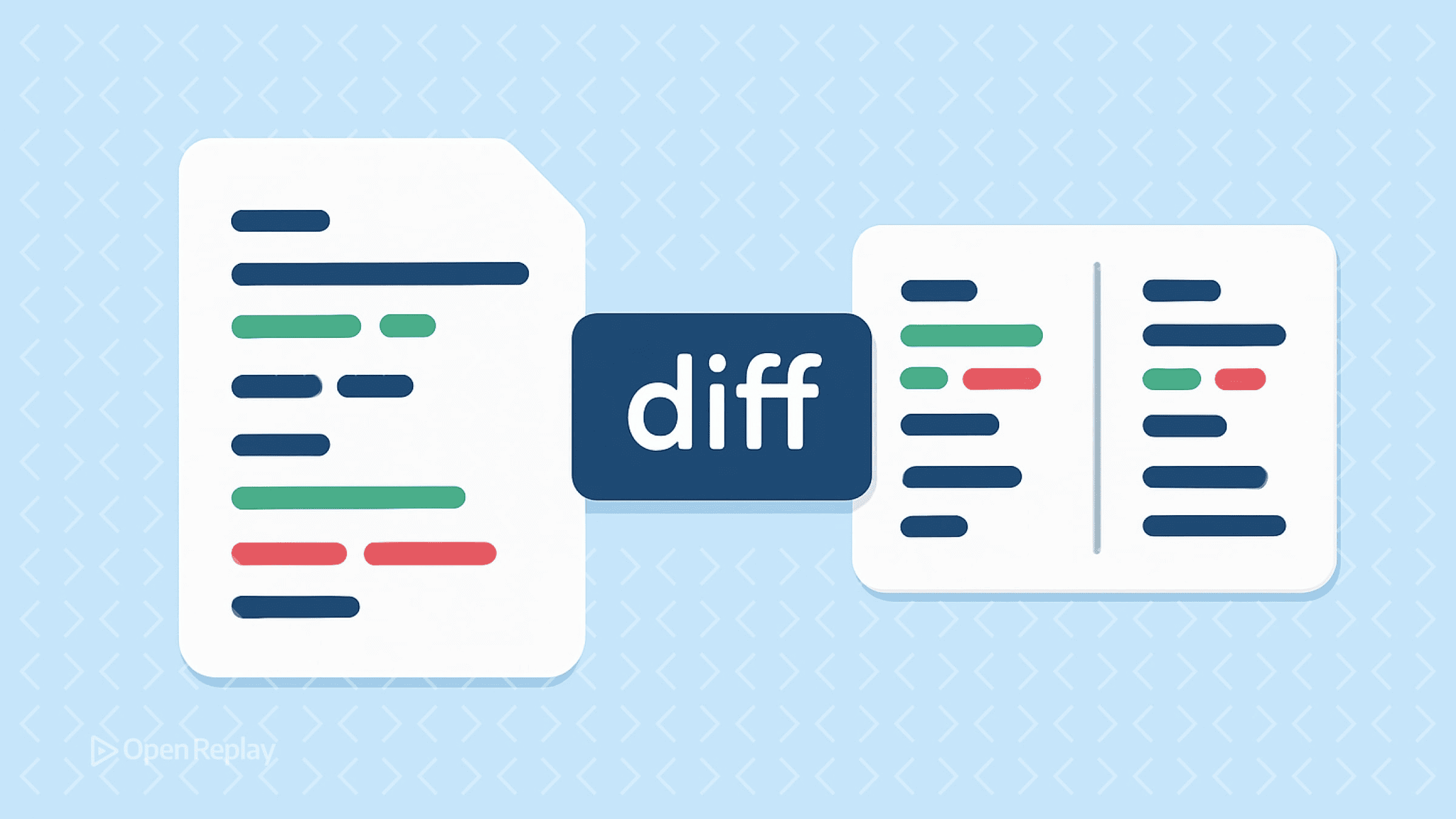
Every code review starts the same way: staring at a wall of red and green lines, trying to figure out what actually changed. For frontend developers working in Git-based workflows, reading diffs quickly and accurately is a core skill. Yet most of us learned diff reading through osmosis rather than deliberate practice.
This article covers how to interpret code changes effectively—from understanding unified diff format to navigating modern tools that make the process faster.
Key Takeaways
- The unified diff format uses
-for removed lines,+for added lines, and hunk headers to show change locations - Use
git diff -wto ignore whitespace noise andgit diff --stagedto review changes before committing - Semantic diff tools like Difftastic compare code structure rather than raw text, filtering out formatting noise
- AI-assisted summaries help orient you during reviews but should not replace careful manual inspection
Understanding the Unified Diff Format
The unified diff format is what you see in git diff output and pull request interfaces. Learning to read it fluently saves hours during code review.
A typical diff looks like this:
@@ -3,5 +3,6 @@
 import React from 'react';
-const Button = ({ label }) => {
+const Button = ({ label, disabled }) => {
   return (
-    <button>{label}</button>
+    <button disabled={disabled}>{label}</button>
   );
The hunk header (@@ -3,5 +3,6 @@) tells you where changes occur. The -3,5 means the original file showed 5 lines starting at line 3, while +3,6 means the new version shows 6 lines starting at line 3. Lines starting with - were removed and lines with + were added. Unmarked lines provide context—typically three lines above and below each change.
Context lines matter more than they seem. They help you understand where in the file a change lives without opening the full source.
Git Diff in Daily Work
The git diff command compares different states of your code. The most common comparisons:
git diffshows unstaged changes against your last staged versiongit diff --stagedshows what you’re about to commitgit diff main feature-branchcompares branches
For frontend work, whitespace changes from formatters like Prettier often clutter diffs. Use git diff -w to ignore whitespace, or git diff --word-diff to see changes within lines rather than entire line replacements.
When reviewing your own work before committing, git diff --staged is essential. It shows exactly what goes into your next commit—nothing more, nothing less.
Multi-File Diffs in Modern Editors
VS Code and similar editors transform how developers read diffs. Instead of scrolling through terminal output, you get a file tree showing changed files, inline annotations, and side-by-side comparisons.
The staged versus unstaged distinction becomes visual. You can stage individual hunks or even single lines, building commits that tell a coherent story rather than dumping everything at once.
Pull request interfaces on GitHub and GitLab add another layer. File-by-file navigation, collapsible sections, and conversation threads tied to specific lines make reviewing large changes manageable. These UIs shape how teams discuss code—comments attach to diff lines, not abstract descriptions.
Discover how at OpenReplay.com.
Semantic Diff Tools for Frontend Codebases
Traditional line-based diffs have a limitation: they don’t understand code structure. Rename a variable across a file, and you’ll see dozens of changed lines even though the semantic change is simple.
Semantic diff tools like Difftastic parse code using tree-sitter and compare abstract syntax trees rather than raw text. The result: reformatting noise disappears, and actual logic changes stand out.
For frontend codebases where Prettier runs on every commit, this matters enormously. A semantic diff tool recognizes that moving a function or reformatting JSX isn’t a meaningful change—it shows you what the code does differently, not just how it looks different.
These tools integrate with Git as custom diff drivers, so you can use them transparently in your existing workflow.
AI-Assisted Diffs in Code Review
GitHub Copilot, GitLab’s AI features, and third-party tools now offer AI-assisted diff summaries. They generate plain-language explanations of what changed and why it might matter.
These summaries help when reviewing unfamiliar code or large PRs. Instead of piecing together meaning from scattered hunks, you get a starting point: “This PR adds error handling to the payment flow and updates related tests.”
But AI summaries are starting points, not conclusions. They miss context that only humans have—why a particular approach was chosen, what constraints existed, whether a change aligns with team conventions. The developer still performs final judgment.
The practical workflow: use AI summaries to orient yourself, then read the actual diff to verify and understand details.
Conclusion
Effective diff reading combines tool knowledge with deliberate practice. Understand the unified format so terminal output doesn’t intimidate you. Use editor integrations for complex reviews. Consider semantic diff tools if reformatting noise wastes your time. Let AI summaries accelerate orientation without replacing careful review.
The goal isn’t reading every line—it’s understanding what changed and whether that change is correct. Better tools and clearer mental models get you there faster.
FAQs
The hunk header shows line numbers and counts for both file versions. For example, -3,5 means 5 lines starting at line 3 in the original file, while +3,6 means 6 lines starting at line 3 in the new version. This helps you locate changes without opening the full file.
Use git diff -w to ignore whitespace changes, or git diff --word-diff to highlight only the words that changed within lines. For persistent formatting noise, consider semantic diff tools like Difftastic that compare code structure instead of raw text.
AI summaries are useful for orientation, especially with large PRs or unfamiliar code. However, they lack project context and team conventions. Use them as a starting point, then verify details by reading the actual diff yourself before approving changes.
Running git diff shows changes in your working directory that have not been staged yet. Running git diff --staged shows changes that are staged and ready to be committed. Use --staged to review exactly what will go into your next commit.
Gain control over your UX
See how users are using your site as if you were sitting next to them, learn and iterate faster with OpenReplay. — the open-source session replay tool for developers. Self-host it in minutes, and have complete control over your customer data. Check our GitHub repo and join the thousands of developers in our community.