The Most Useful MCP Servers for AI-Powered Development

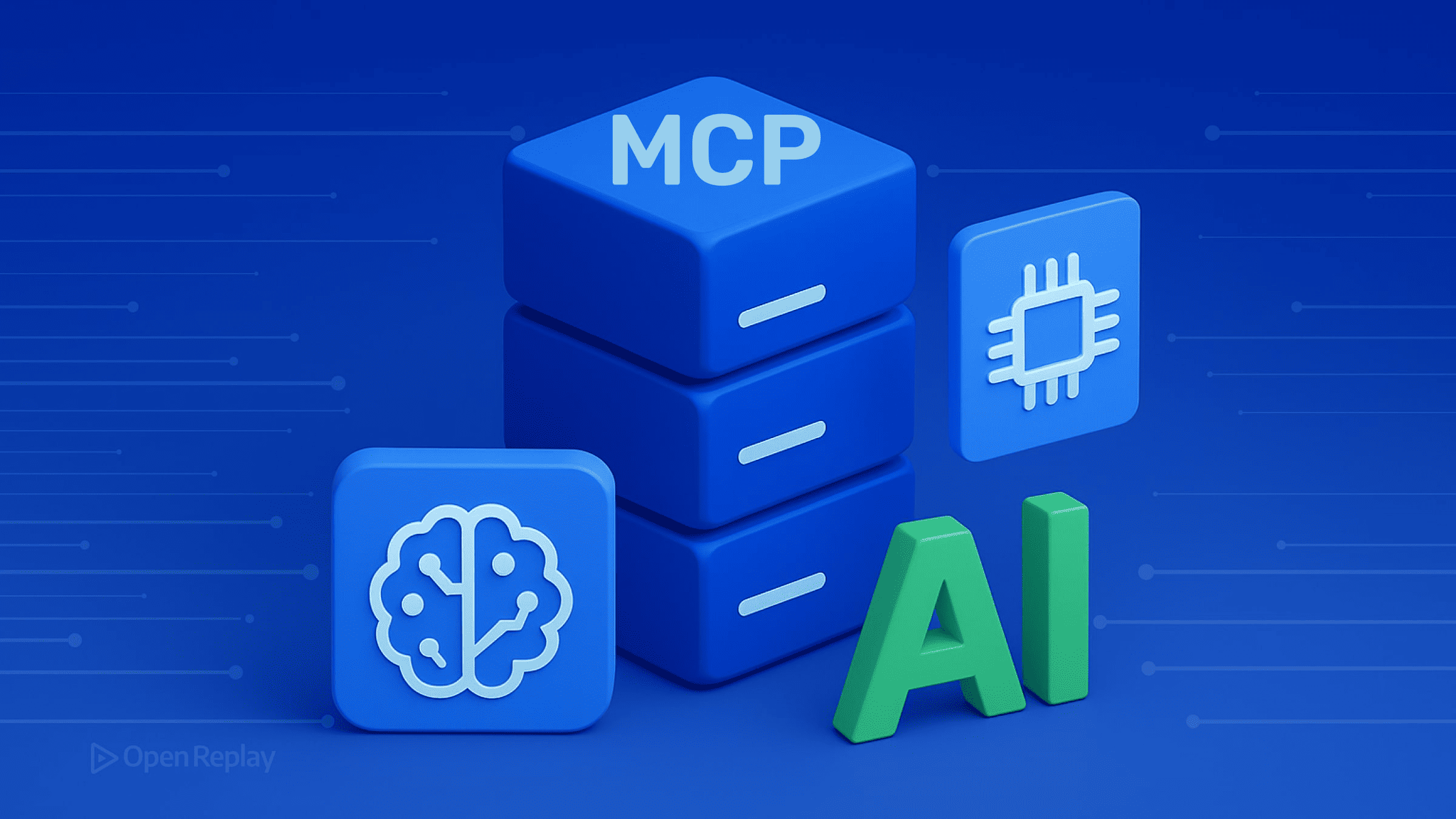
If you’re building with LLMs or agents in production, you’ve probably hit the same wall: your AI can reason about code but can’t read your files, check your Git history, or fetch live data. Model Context Protocol (MCP) servers solve this by giving AI models structured access to external tools and data sources through a standardized interface.
This article covers what MCP servers actually do, how they work across different transport methods, and which ones are worth integrating into your frontend development workflow today.
Key Takeaways
- MCP is a standardized protocol that connects AI models to external tools like filesystems, Git, and APIs through a universal interface.
- Local MCP servers use stdio transport for direct access to your development environment, while remote servers use HTTP/SSE for cloud-based integrations.
- Security requires careful attention: scope access narrowly, handle credentials properly, and guard against prompt injection attacks.
- Start with Filesystem and Git servers for immediate productivity gains, then add specialized servers as your workflows demand.
What MCP Servers Do and Why They Matter
MCP is a protocol—originally developed by Anthropic but now supported across the ecosystem—that standardizes how AI models connect to external capabilities. Think of it as a universal adapter between your AI assistant and the tools it needs to be useful.
The protocol uses JSON-RPC 2.0 for communication. An MCP host (like Claude Desktop, VS Code with Copilot, or Cursor) connects to MCP servers that expose specific capabilities: reading files, making HTTP requests, querying databases, or interacting with APIs.
What makes MCP valuable for agent tooling infrastructure is the standardization. Instead of building custom integrations for every tool-model combination, you configure MCP servers once and they work across any compatible host.
Local vs. Remote MCP Servers
MCP servers run in two modes:
Local (stdio transport): The server runs on your machine, communicating through standard input/output. This is common for filesystem access, local Git operations, or anything touching your development environment directly.
Remote (HTTP/SSE transport): The server runs elsewhere—on a cloud service or your own infrastructure—and communicates over HTTP with Server-Sent Events for streaming. Remote servers often include OAuth support for authenticated access to third-party services.
For frontend development, you’ll typically use local servers for file and Git access, and remote servers for web fetching or API integrations.
Security Considerations
MCP servers execute real actions on your behalf, which introduces real risks.
Authorization matters. Remote MCP servers with OAuth support (like GitHub’s official server) handle credentials properly. For local servers, be explicit about which directories and operations you’re permitting.
Prompt injection is a concern. If your AI processes untrusted content—user input, fetched web pages, external documents—that content could contain instructions that manipulate the model into misusing MCP tools. Treat MCP tool calls with the same caution you’d apply to any code execution.
Scope access narrowly. Most MCP servers let you configure which capabilities to expose. Enable only what you need.
Discover how at OpenReplay.com.
The Most Useful MCP Servers for Frontend Workflows
Here are servers that solve real problems in AI-powered development, organized by function.
Filesystem Access
Filesystem MCP Server — Lets AI read, write, and search files within directories you specify. Essential for any coding workflow where the model needs to understand your project structure.
Frontend example: Point it at your src directory and ask the AI to refactor component files or find all usages of a deprecated prop.
Web Fetching
Fetch MCP Server — Retrieves web content and converts it to markdown for AI consumption. Handles HTML parsing and content extraction.
Frontend example: Fetch documentation pages for a library you’re integrating, then ask the AI to generate TypeScript types based on the API reference.
Git Integration
Git MCP Server — Provides read access to Git repositories: history, diffs, branches, and file contents at specific commits.
Frontend example: Ask the AI to summarize changes in a feature branch or identify when a specific bug was introduced.
Persistent Memory
Memory MCP Server — Stores and retrieves information across sessions using a knowledge graph structure.
Frontend example: Have the AI remember your project’s naming conventions, component patterns, or architectural decisions between conversations.
Remote Servers with OAuth
GitHub MCP Server — Official server for GitHub operations: issues, PRs, code search, and repository management. Supports OAuth for secure authentication.
Frontend example: Create issues directly from your editor, or ask the AI to draft release notes from merged PRs.
Playwright MCP Server — Enables browser automation for testing and web interaction. Microsoft-maintained.
Frontend example: Generate end-to-end tests by describing user flows in natural language.
Getting Started
Most MCP hosts (VS Code, Claude Desktop, Cursor) use a JSON configuration file to specify which servers to load. The official servers list provides setup instructions for each.
Start with Filesystem and Git for immediate productivity gains. Add Fetch when you need live web data. Layer in specialized servers as your workflows demand them.
Conclusion
MCP servers turn AI assistants from isolated chat interfaces into tools that can actually interact with your development environment. The protocol is stable, the ecosystem is growing, and the productivity gains are concrete. By starting with essential servers like Filesystem and Git, then expanding to specialized tools as needed, you can build a powerful AI-augmented development workflow that adapts to your specific needs.
FAQs
MCP is an open protocol that works with any compatible host application. While Anthropic developed it, MCP servers work with VS Code, Cursor, and other editors that support the protocol. The key requirement is that your AI host application implements MCP client support, not which underlying model you use.
Most MCP servers accept configuration options that limit their scope. For the Filesystem server, you specify exactly which directories the AI can access. Always follow the principle of least privilege by enabling only the directories and operations your workflow actually requires.
MCP uses JSON-RPC 2.0, which handles errors gracefully. If a server crashes or times out, the host application receives an error response and can notify you. Local servers using stdio transport will terminate cleanly, while remote servers may require reconnection depending on your configuration.
Local MCP servers using stdio transport work entirely offline since they run on your machine. Remote servers require network connectivity. For offline development, prioritize local servers for filesystem, Git, and memory operations, and use remote servers only when you need external API access.
Understand every bug
Uncover frustrations, understand bugs and fix slowdowns like never before with OpenReplay — the open-source session replay tool for developers. Self-host it in minutes, and have complete control over your customer data. Check our GitHub repo and join the thousands of developers in our community.