Understanding Database Transactions
Database transactions, ACID, isolation levels, and MVCC explained with practical guidance for reliable concurrency and rollback handling.

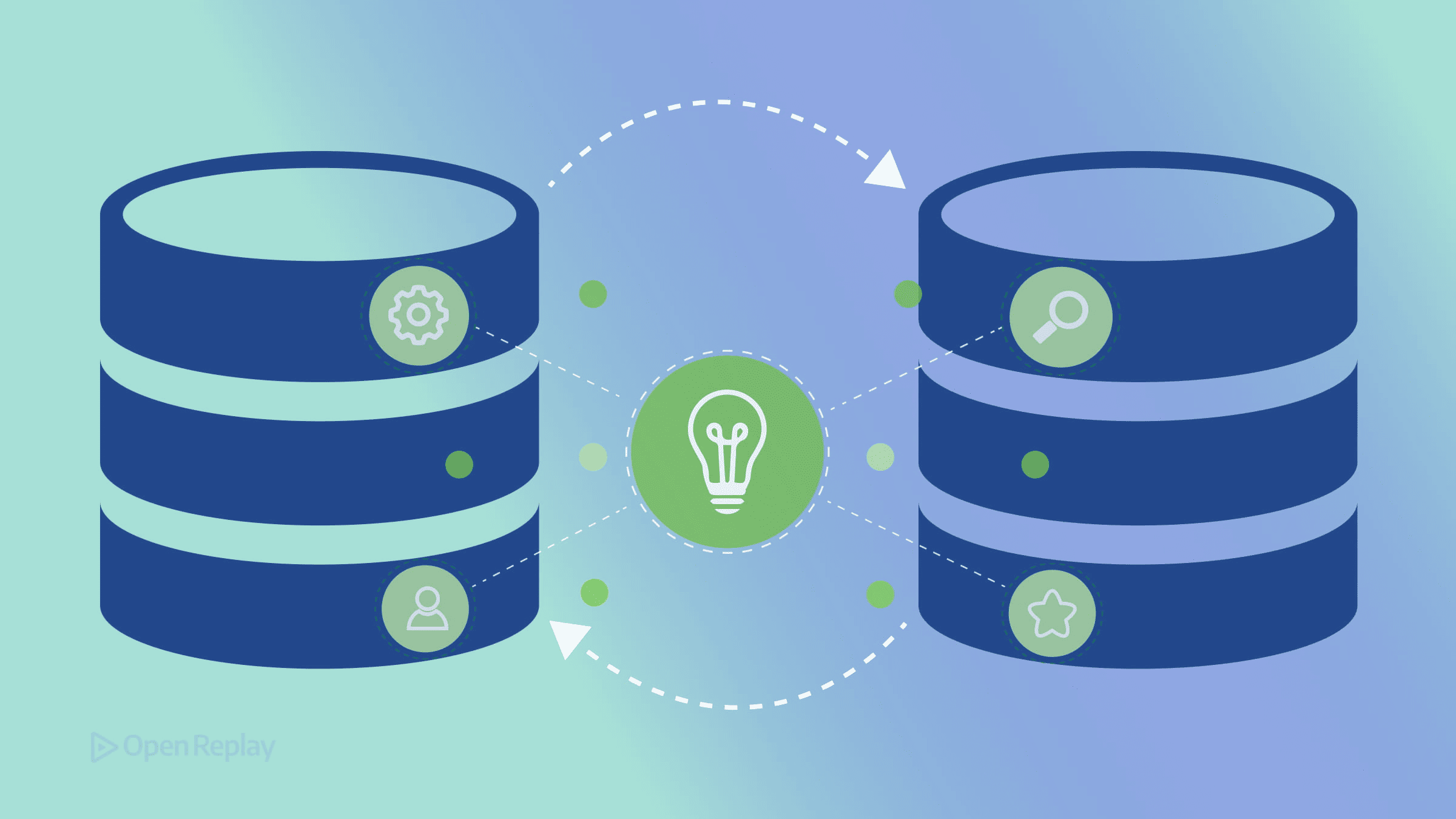
When a user places an order on your platform, several things happen at once: inventory decreases, a payment record is created, and an order entry is saved. If the server crashes halfway through, you could end up with a charged customer and no order. Database transactions exist specifically to prevent that kind of partial failure.
This article covers what database transactions are, how ACID properties enforce reliability, how transaction isolation levels control concurrent access, and how modern databases use MVCC to make all of this work efficiently.
Key Takeaways
- A database transaction groups multiple operations into a single unit of work — either all succeed or all are rolled back.
- ACID properties (Atomicity, Consistency, Isolation, Durability) define the reliability guarantees that transactions provide.
- SQL defines four isolation levels, but real-world behavior varies significantly across database engines like PostgreSQL, MySQL, and SQLite.
- MVCC allows modern databases to handle concurrent reads and writes efficiently by maintaining multiple row versions instead of relying on heavy locking.
What Is a Database Transaction?
A database transaction is a sequence of operations treated as a single unit of work. Either all operations succeed and the changes are committed, or something fails and everything is rolled back to the previous state.
In SQL, a basic transaction looks like this:
BEGIN;

UPDATE accounts SET balance = balance - 500 WHERE id = 1;
UPDATE accounts SET balance = balance + 500 WHERE id = 2;

COMMIT;
If anything fails between BEGIN and COMMIT, a ROLLBACK restores the database to its state before the transaction started. Most databases also support SAVEPOINT for partial rollbacks within a transaction.
ACID Properties: What They Actually Mean
ACID is the set of guarantees that make transactions reliable:
- Atomicity — All steps succeed, or none do. No partial updates.
- Consistency — The database moves from one valid state to another. Constraints and rules are enforced.
- Isolation — Concurrent transactions don’t interfere with each other.
- Durability — Once committed, changes survive crashes. This is typically implemented via write-ahead logging (WAL).
ACID compliance has a performance cost. Some systems let you trade strict guarantees for speed, which is why understanding these properties matters when designing your data layer.
Transaction Isolation Levels Explained
Isolation is the most nuanced of the four ACID properties. SQL defines four standard transaction isolation levels, each allowing different trade-offs between consistency and concurrency:
| Isolation Level | Dirty Reads | Non-Repeatable Reads | Phantom Reads |
|---|---|---|---|
| READ UNCOMMITTED | Possible | Possible | Possible |
| READ COMMITTED | Prevented | Possible | Possible |
| REPEATABLE READ | Prevented | Prevented | Possible |
| SERIALIZABLE | Prevented | Prevented | Prevented |
Important: Real-world behavior varies by database engine.
- PostgreSQL doesn’t implement
READ UNCOMMITTED— it silently upgrades it toREAD COMMITTED. Its default isREAD COMMITTEDas documented in the official isolation level guide. - MySQL (InnoDB) defaults to
REPEATABLE READ. It uses gap locks in certain cases to reduce phantom reads, but behavior depends on the isolation level and query pattern as described in the InnoDB isolation docs. - SQLite uses a single-writer model, meaning only one write transaction can run at a time. It supports
DEFERRED,IMMEDIATE, andEXCLUSIVEtransaction modes rather than the standard isolation levels, as outlined in the SQLite transaction documentation.
Don’t assume identical behavior across databases. Always check the documentation for your specific engine.

Discover how at OpenReplay.com.
How MVCC Makes Isolation Practical
Most modern relational databases — including PostgreSQL and MySQL (InnoDB) — implement isolation through Multi-Version Concurrency Control (MVCC) rather than simple locking.
With MVCC, queries see a consistent snapshot of the data, but whether that snapshot is taken per statement or per transaction depends on the isolation level and database engine. Writers create new versions of rows rather than overwriting them. Readers don’t block writers, and writers don’t block readers.
This is why PostgreSQL can serve read-heavy workloads without readers constantly waiting on locks. The trade-off is that old row versions accumulate and must be cleaned up — in PostgreSQL, this is handled by the VACUUM process.
MVCC is what makes REPEATABLE READ and snapshot isolation practical at scale.
Transactions Across Different Systems
Not all databases handle transactions the same way:
- MySQL (InnoDB) supports full ACID transactions. The older MyISAM engine does not.
- PostgreSQL has robust MVCC and supports
SERIALIZABLEisolation with true serializability guarantees. - SQLite is fully ACID-compliant but serializes all writes, making it unsuitable for high-concurrency write workloads.
- MongoDB added multi-document transactions in version 4.0, but they carry more overhead than in traditional relational databases and are best used selectively.
Practical Guidelines for Using Transactions
- Keep transactions short. Long-running transactions hold locks or retain old MVCC snapshots, which degrades performance.
- Don’t wrap read-only queries in transactions unnecessarily — especially in high-traffic APIs.
- Handle errors explicitly. Always ensure a
ROLLBACKhappens on failure, whether you’re writing raw SQL or using an ORM. - Choose your isolation level deliberately.
READ COMMITTEDis a reasonable default for most web applications. UseSERIALIZABLEonly when correctness demands it, and test the performance impact.
Conclusion
Database transactions give you a reliable way to keep data consistent across multiple operations. Understanding ACID properties tells you what guarantees you’re working with. Knowing your isolation levels and how your specific database implements MVCC tells you what those guarantees actually cost — and where the edge cases live. That knowledge is what separates developers who use transactions from developers who use them well.
FAQs
When should I use SERIALIZABLE isolation instead of READ COMMITTED?
Use SERIALIZABLE when your application requires strict correctness guarantees, such as financial calculations or inventory management where concurrent transactions must not produce conflicting results. For most web applications, READ COMMITTED offers a good balance between consistency and performance. Always benchmark SERIALIZABLE in your environment, as it can reduce concurrency and lead to transaction retries depending on the database engine.
Do I need transactions for single SQL statements?
Most databases automatically wrap each individual SQL statement in an implicit transaction, so a single INSERT or UPDATE is already atomic. Explicit transactions become necessary when you need to group multiple statements into one unit of work, ensuring they all succeed or all fail together. Wrapping a lone statement in BEGIN and COMMIT adds overhead without meaningful benefit.
How do I handle transaction failures in application code?
Always use try-catch or equivalent error-handling blocks around your transaction logic. If any operation within the transaction throws an error, issue a ROLLBACK to undo all changes. Many ORMs and database libraries provide built-in transaction helpers that automatically roll back on exceptions. Avoid silently swallowing errors, as this can leave your data in an inconsistent state.
What is the difference between MVCC and traditional locking?
Traditional locking can cause readers and writers to block each other more often, which limits concurrency. MVCC avoids this by keeping multiple versions of each row so readers access a consistent snapshot without waiting for writers. The trade-off is that old row versions must be periodically cleaned up, as PostgreSQL does with its VACUUM process. MVCC generally provides better throughput for read-heavy workloads.
Gain control over your UX
See how users are using your site as if you were sitting next to them, learn and iterate faster with OpenReplay — the open-source session replay tool for developers. Self-host it in minutes, and have complete control over your customer data.
Star on GitHub12k